Hugging Face and IBM Research published The Open Agent Leaderboard on May 18, 2026. The real reason it matters is not “another leaderboard exists now.” The real reason is that it makes a neglected point impossible to ignore: when you deploy an agent, you are not choosing only a model. You are choosing a full system, including tools, planning, memory, recovery behavior, and cost structure.
This sits close to, but is different from, the argument in Why the Artificial Analysis coding-agent benchmarks matter. That post is about reading coding-agent benchmarks correctly. This new release is about comparing general-purpose agent systems themselves. If you are deciding between entry points like Claude, ChatGPT, and Cursor, this topic matters because it shows why the model label is only part of the story.
What was actually released
The official blog is clear about the scope:
- This is an open evaluation for full agent systems, not only models.
- It reports both quality and cost.
- It ships together with the leaderboard, the Exgentic reproduction framework, and a methodology paper.
- It evaluates six benchmarks spanning coding, customer service, technical support, personal assistance, and research.
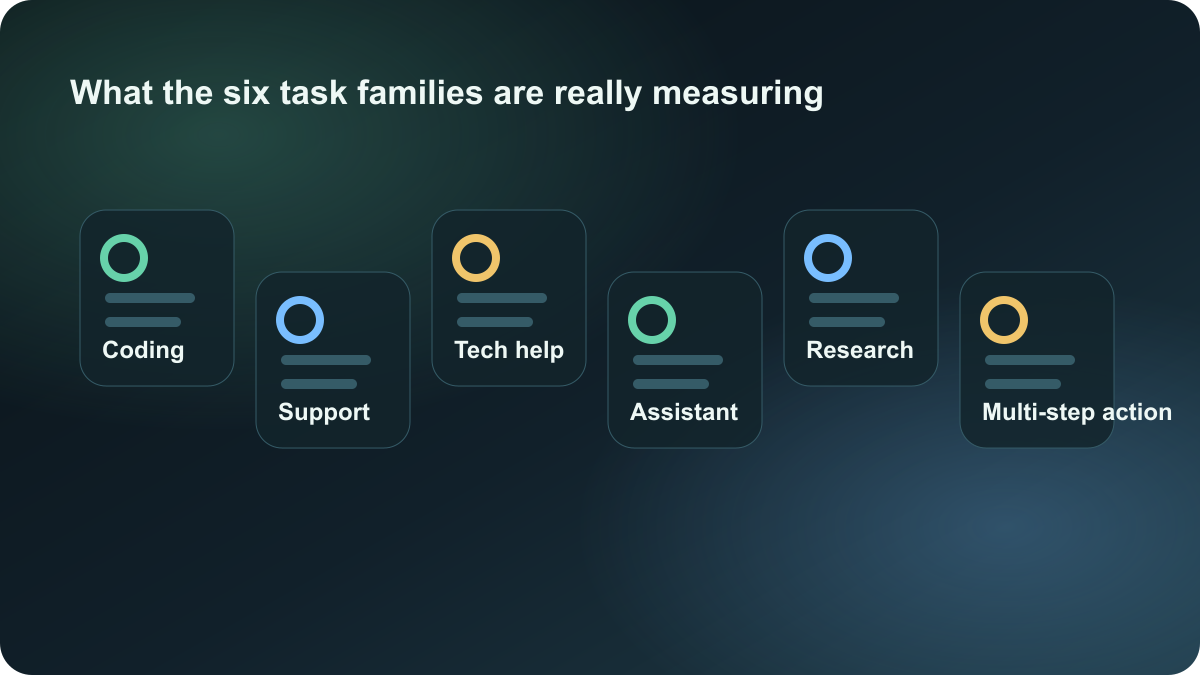
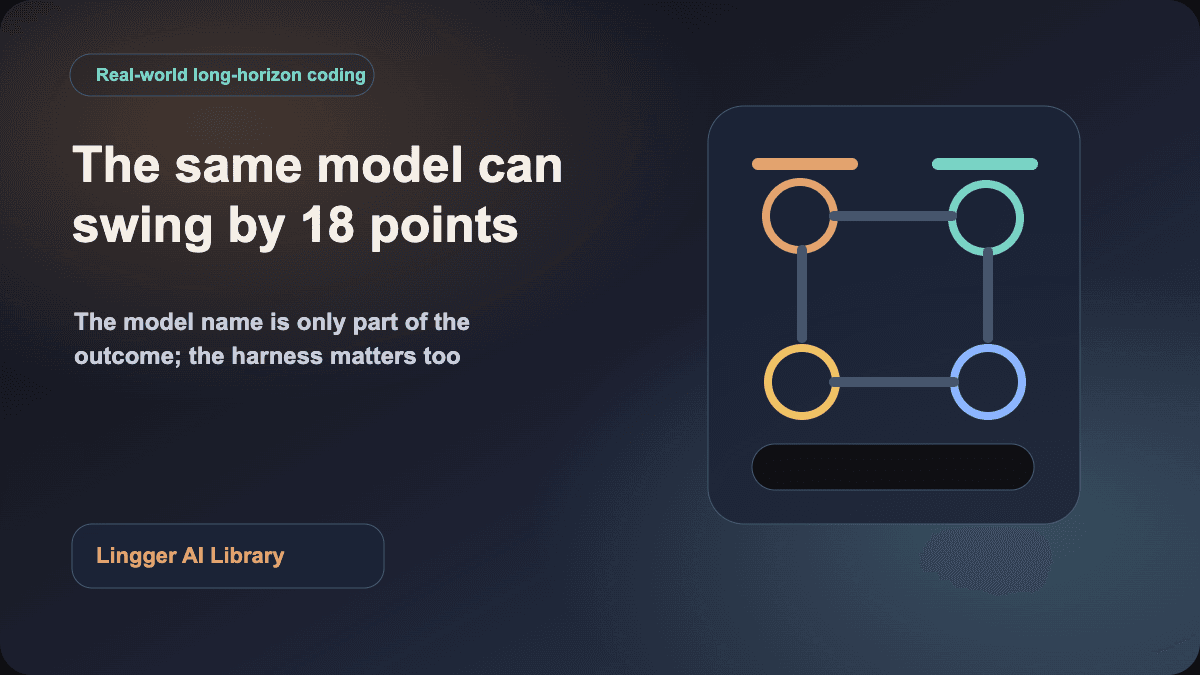
That is the key difference from a typical model leaderboard. Many benchmark pages quietly assume that “the model” is the thing being compared. The Open Agent Leaderboard says the deployed object is the whole agent system. The same underlying model can produce different outcomes and very different bills once the surrounding tools, memory, and action logic change.
Why this matters more than one headline score
The official “how to read the leaderboard” section gives a very direct example: the current top three all use the same model, yet they still differ in both score and cost because the agent systems wrapped around that model are different. That matters because real buying or pilot decisions often flatten the question into “which model is best.” In practice, the model only explains part of the difference.
The more useful findings come right after that:
- General-purpose agents are already competitive with specialized systems across several benchmarks.
- Failure behavior matters as much as success rates. In the official experiments, failed runs cost 20%-54% more than successful ones.
- Tool shortlisting, which is not a flashy product feature at all, improved performance across every model they tested and turned failing configurations into viable ones.
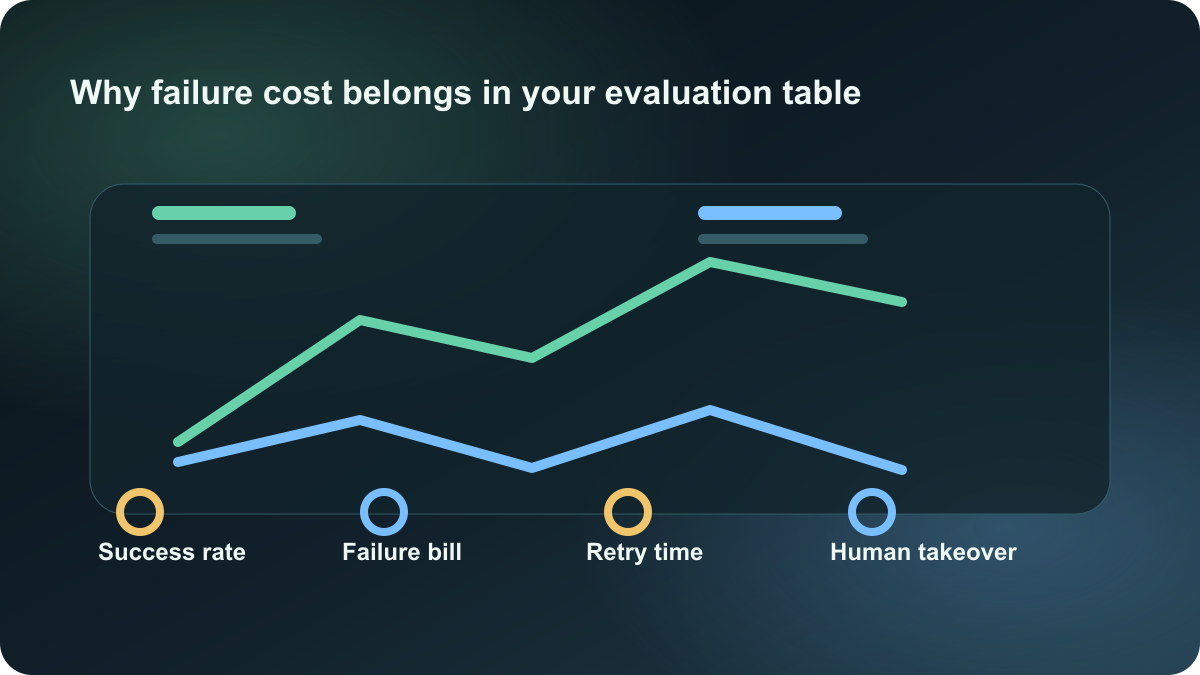
That is more useful than “who ranked first,” because real teams do not deploy screenshots of leaderboard tables. They deploy systems that succeed, fail, retry, and produce bills. An agent with a decent success rate can still be the wrong production choice if its failures are slow, expensive, and hard to recover from.
What practical teams should learn from it
The best part of this release is not the rankings. It is the comparison method. From now on, teams should separate at least four questions:
- Are we evaluating a model or a full agent system?
- Do we see failure cost and runtime cost, or only success rates?
- Do the benchmarks match the kinds of work we actually want to hand over?
- Are architecture choices visible, or are they hidden behind the model name?
That is also why this post points relatedTools to claude, chatgpt, and cursor instead of treating the story like an abstract research update. Site readers usually start from concrete work surfaces: should we keep using a general-purpose agent workspace, or should we switch to something that behaves more like an engineering system?
This release also pairs well with Why AlphaEvolve matters to AI coding-tool users. That article emphasizes goal functions, evaluators, and candidate search. This leaderboard emphasizes that the deployed unit is the full agent system. Together they say the same broader thing: the next stage of AI agents is not better conversation. It is more reliable action across different environments, with costs you can actually measure.
What to do next
If you are a solo developer, do not let an external leaderboard make the decision for you. A better move is to break your own work into categories first:
- fixing bugs inside repositories
- researching across the web and docs
- running multi-tool customer or operations tasks
- managing long-loop work with approval points
Then ask which benchmarks are closest, which costs are acceptable, and where human fallback is still required.
If you run a team, you can turn the Open Agent Leaderboard into an internal evaluation template:
- Define two or three job types you actually want agents to handle.
- Track success rate, runtime, failure cost, and human takeover frequency for each one.
- Re-run candidates with a fixed agent setup instead of hand-tuning every trial.
- Compare products only under conditions you can reproduce locally.
This is worth publishing today because it moves the industry conversation from “who is smartest” to “what is actually worth deploying.” For site readers building workflows, that is a much more durable signal than another round of model-score fluctuation.
Sources:
- Hugging Face / IBM Research: The Open Agent Leaderboard
- Hugging Face: Open Agent Leaderboard