OpenAI updated Codex Updates on May 21, 2026. Read as a release-note list, it looks like a handful of separate improvements: Appshots, Goal mode becoming generally available, Browser Annotations, locked computer use, plus smaller workflow fixes such as one-click repair and better copy/paste. Read as one story, though, it says something more important. OpenAI is still pushing Codex away from "an agent that can edit a repo" and toward "a long-running delivery system that can watch interfaces, accept mid-task feedback, and continue under tighter control."
That is why this update matters more than a generic model headline. It changes how teams should compare Cursor, Claude, and GitHub Copilot. The question is no longer only who writes better code. It is increasingly who can carry a task across repository work, browser state, human checkpoints, and UI verification without collapsing back into manual glue.
What actually changed this time
The help-center update lists several concrete changes, and together they form a full loop:
Goal modeis now generally available instead of being a narrower preview capability.Appshotsgives live visual visibility into interface changes, so you do not have to infer everything from text logs.Browser Annotationsmakes browser feedback more structured, instead of forcing teams to rely only on screenshots and free-form descriptions.locked computer useshows OpenAI continuing to move computer use toward a more controlled execution setup rather than leaving it as a browser-clicking demo.- The remaining updates improve repair, copy/paste, and day-to-day flow around longer tasks.
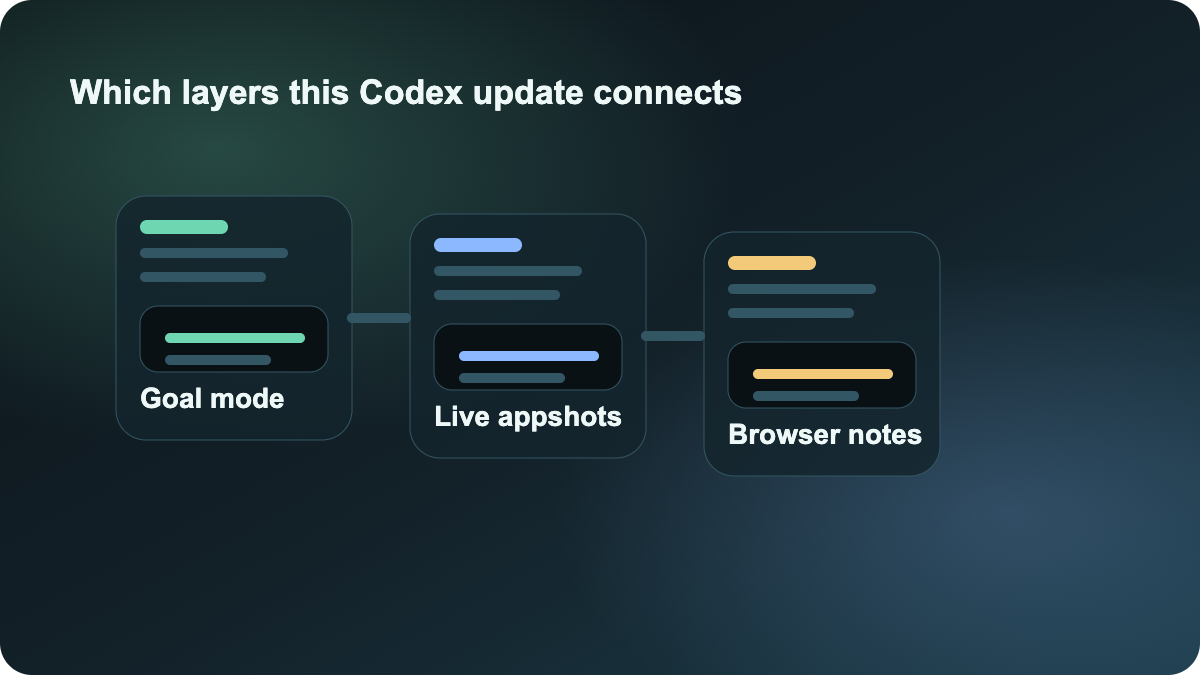
The most important part is not any single feature. It is the combination of visibility, feedback, and controlled execution. When teams let an agent handle longer work, the real bottleneck is often not code generation. It is whether anyone can see what the agent is seeing, where it changed course, why it paused, and how a human can step in without restarting the entire run. Goal mode and Appshots matter because they reduce that gap.
Why this is not just a minor Codex tune-up
We already have a related post on what OpenAI bringing Codex to mobile really means. That story was about continuity outside the desk: how a human stays connected to a long-running task while away from the main machine. The May 21 update is about something different but complementary: how the task becomes easier to observe, annotate, and steer while it is already in motion.
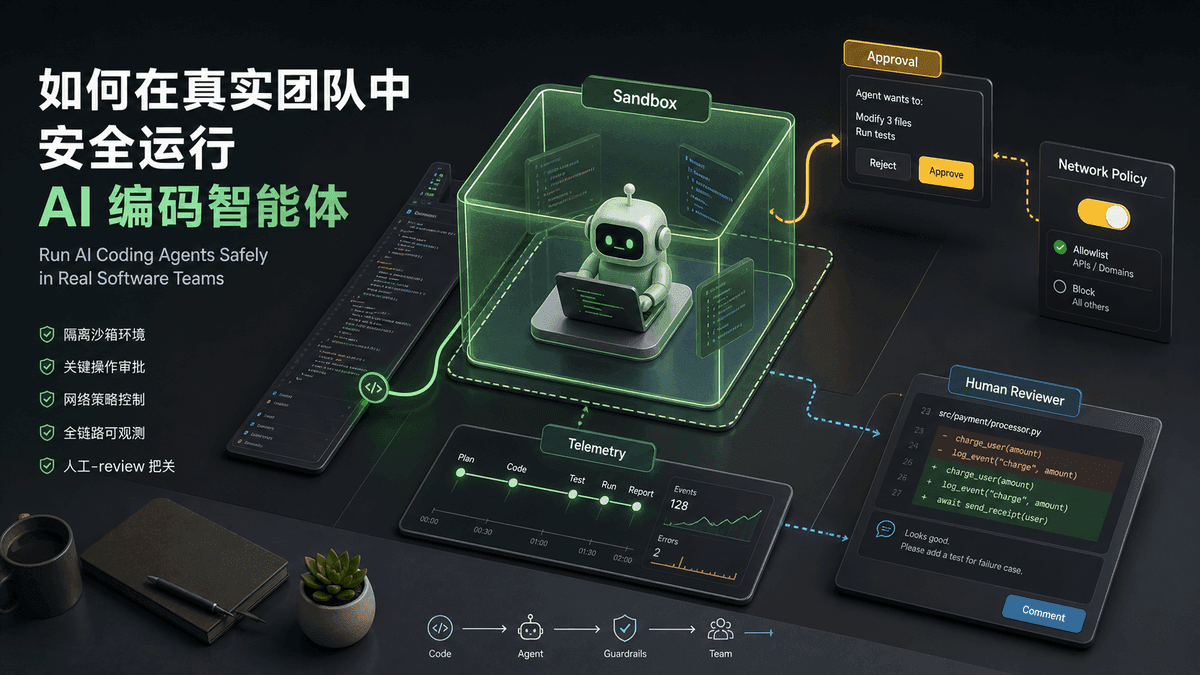
It also pairs well with Running Codex safely at OpenAI. That post is about sandboxing, approvals, network policy, and agent-native safety boundaries. This update moves one layer up and answers a more product-shaped question: once you accept a controlled coding agent, how do you make the running task easier to inspect and correct in practice?
That is also where the comparison with Cursor and GitHub Copilot gets more interesting. Many coding products can already edit multiple files, run commands, and work with repository context. Fewer products make browser state, visual change review, mid-task goal adjustment, and controlled computer use feel like parts of the same delivery flow. OpenAI is clearly signaling that the next phase of competition is longer loops, richer feedback, and more realistic execution.
The main lesson is not Goal mode itself
Many teams will read this and jump straight to a buying question. A better response is to use it as a workflow-design prompt. Break long-running coding tasks into four layers:
- Repository work: can the agent edit code, run tests, and produce a reviewable diff?
- Interface work: can it see and interpret what changed in the browser, instead of reporting only terminal output?
- Feedback work: can a human adjust goals, point at regions, or attach structured notes mid-run?
- Control work: can tasks that require computer use continue inside clear control and approval boundaries?
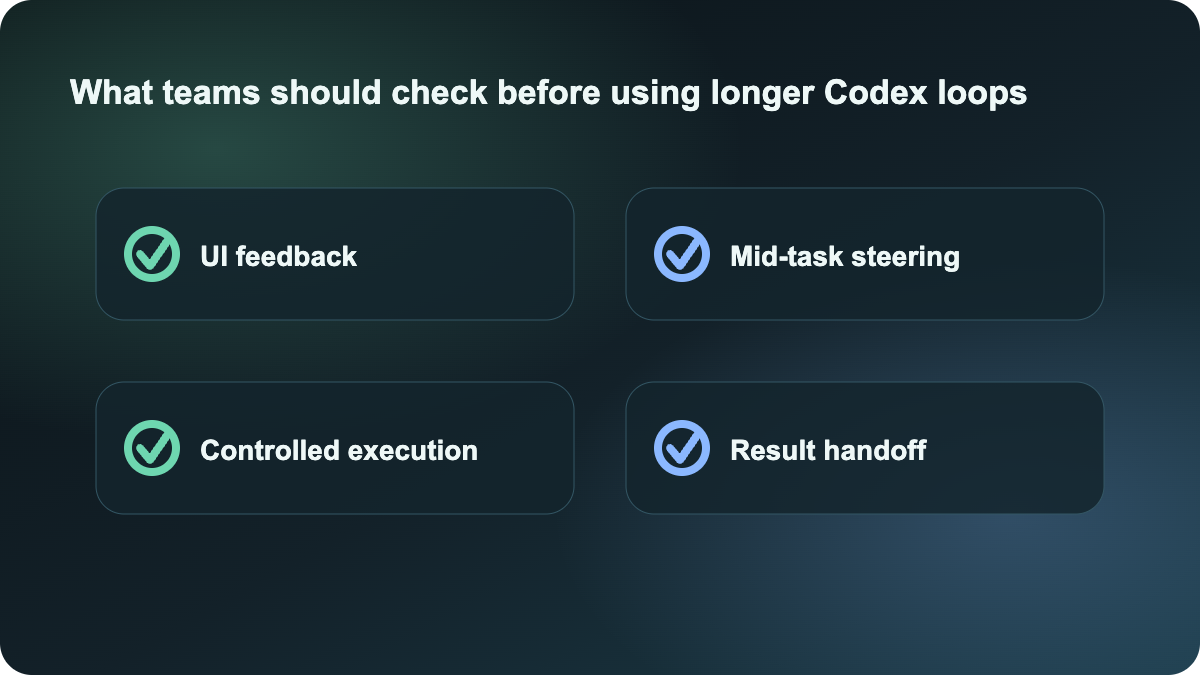
If your team still uses AI mainly for short patches, local refactors, or code explanation, this update may not change your decision tomorrow. But if you are already giving agents tasks that involve browser verification, long-horizon debugging, UI review, or front-end/back-end handoff, it is worth paying attention. It suggests that the right evaluation frame is expanding from "did the code pass?" to "can the whole loop stay visible, steerable, and controlled?"
What to do next
If you are a solo developer, the most useful next step is not necessarily to switch products. Instead, pick one task that includes a visible UI change, let an agent modify it, run it, inspect the interface result, and then continue from that result. The point is to upgrade your own review loop from "terminal only" to "terminal plus interface plus human feedback."
If you run an engineering team, turn this update into an evaluation checklist:
- Does our current coding agent provide useful visual feedback for UI changes?
- When the goal changes mid-task, do we rely on re-prompting, or can we attach more structured guidance?
- For tasks that need computer use, are the control boundaries and approvals clear enough?
- Are browser verification, interface observation, and code changes still fragmented across separate tools?
This update matters because it keeps pushing coding agents closer to real delivery work. For the audience of this site, that is more useful than another isolated capability headline.
Sources:
- OpenAI Help: Codex Updates