Google published Building the agentic future: Developer highlights from I/O 2026 on May 19, 2026. The most useful part is not that Google announced several developer updates at once. The more important part is that Google connected Antigravity 2.0, Antigravity CLI, managed agents in the Gemini API, AI Studio mobile, and native Android app generation into something that looks like a real agent-development workflow.
That matters to readers of this site because it moves beyond “a stronger model” or “one more SDK.” It directly changes how teams should think about AI coding workflow design. Are models still living in separate chat windows, IDE extensions, and custom scripts, or are they becoming part of a single development surface that can move from prompt to app, test, and handoff?
What actually changed
The Google post contains several concrete product facts that belong together:
- The page metadata lists
publish_dateas2026-05-19|17:45. - Google says
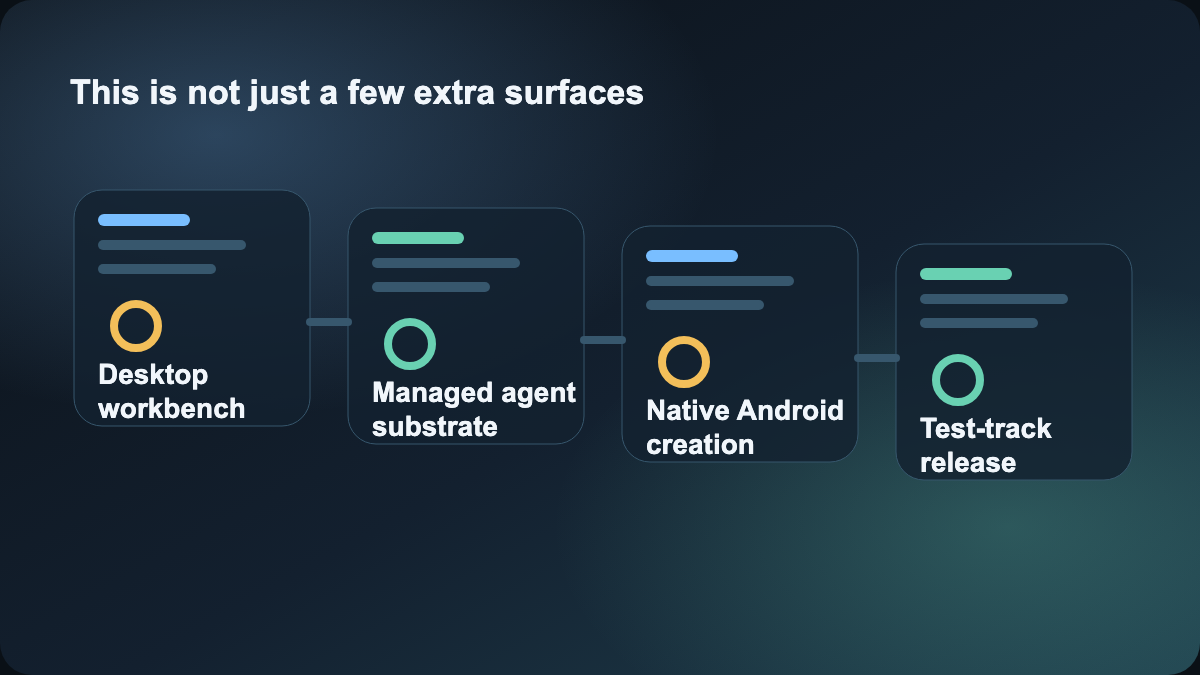
Gemini 3.5 Flashis the high-speed engine for real-world agentic workflows, claiming it outperforms Gemini 3.1 Pro on almost all benchmarks while running four times faster than other frontier models. Antigravity 2.0is now a standalone desktop application focused on agent-optimized work, with parallel agents, dynamic subagents, background scheduled tasks, and integrations across Google AI Studio, Android, and Firebase.Antigravity CLIbecomes the terminal entry point, and Google explicitly says Gemini CLI users are encouraged to migrate.Managed Agents in the Gemini APIare part of the same story: a single API call can spin up an isolated Linux environment where an agent reasons, uses tools, and executes code while preserving state.Google AI Studionow expands across mobile pre-registration, Workspace API integration, export to Antigravity, and native Android support.- Google explicitly says AI Studio can build high-quality Android apps from a prompt and now introduces Google Play Console support for publishing directly to a testing track.
Put together, this is no longer “a few more entry points.” It is Google trying to package the full agent-development loop as a connected product family.
Why this is not the same story as Gemini managed agents
This repository already has a post about managed agents in the Gemini API. That article focused on the platform substrate: hosted runtime, isolation, persistent state, and agent infrastructure.
This new angle is different. Google is no longer only talking about the substrate. It is now talking about the development workbench.
The earlier managed-agents story was mostly answering:
- do teams still need to maintain their own runtime?
- can the environment, state, and tool layer be hosted?
This I/O developer story answers a different set of questions:
- where do developers actually start agentic development work?
- can desktop, terminal, playground, mobile capture, and native Android development connect into one flow?
- can the result move past a demo and into test and engineering handoff?
That is why this deserves its own post instead of another managed-agents recap.
Why the Android part is the most important practical signal
The main Google article already says enough: AI Studio now supports building high-quality Android apps from a prompt and publishing to a Google Play test track.
I also cross-checked the same-day Android Developers Blog post Build native Android apps in Google AI Studio, which makes the workflow much more concrete:
- It is also dated
19 May 2026. - Google says AI Studio can now generate a Kotlin-based Android app from a single prompt in minutes.
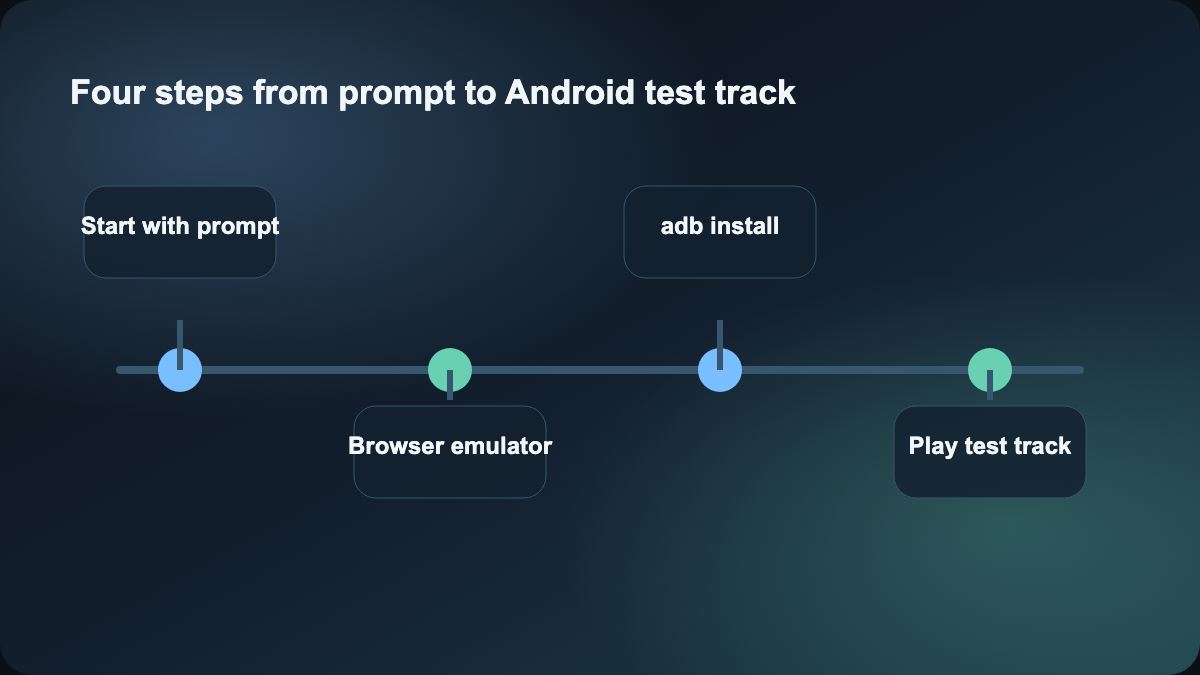
- The flow is not limited to code generation. It includes an embedded Android Emulator in the browser, direct install to an Android device through integrated
adb, and publishing to an internal testing track in Google Play Developer Console. - If the work needs to continue in a fuller engineering setup, the project can be downloaded as a ZIP or exported to GitHub and handed off to Android Studio or another preferred agent / IDE.
- The post also explicitly points teams toward
Gemini in Android Studiofor a more specialized Android workflow, and toward Antigravity when they want to integrateAndroid CLIcommands into Google’s agentic development platform.
That is a meaningful shift. A lot of AI coding product narratives stop at prototype generation. Google is describing a workflow that goes:
- prompt to native Android app
- browser-based emulator preview
- direct install on device
- test-track publish
- handoff back into normal engineering tools
That is much closer to a workflow than a demo.
How this differs from Cursor or Copilot
The obvious question is how this compares with Cursor or GitHub Copilot.
The better framing is not replacement. It is control over different layers of the development entry point.
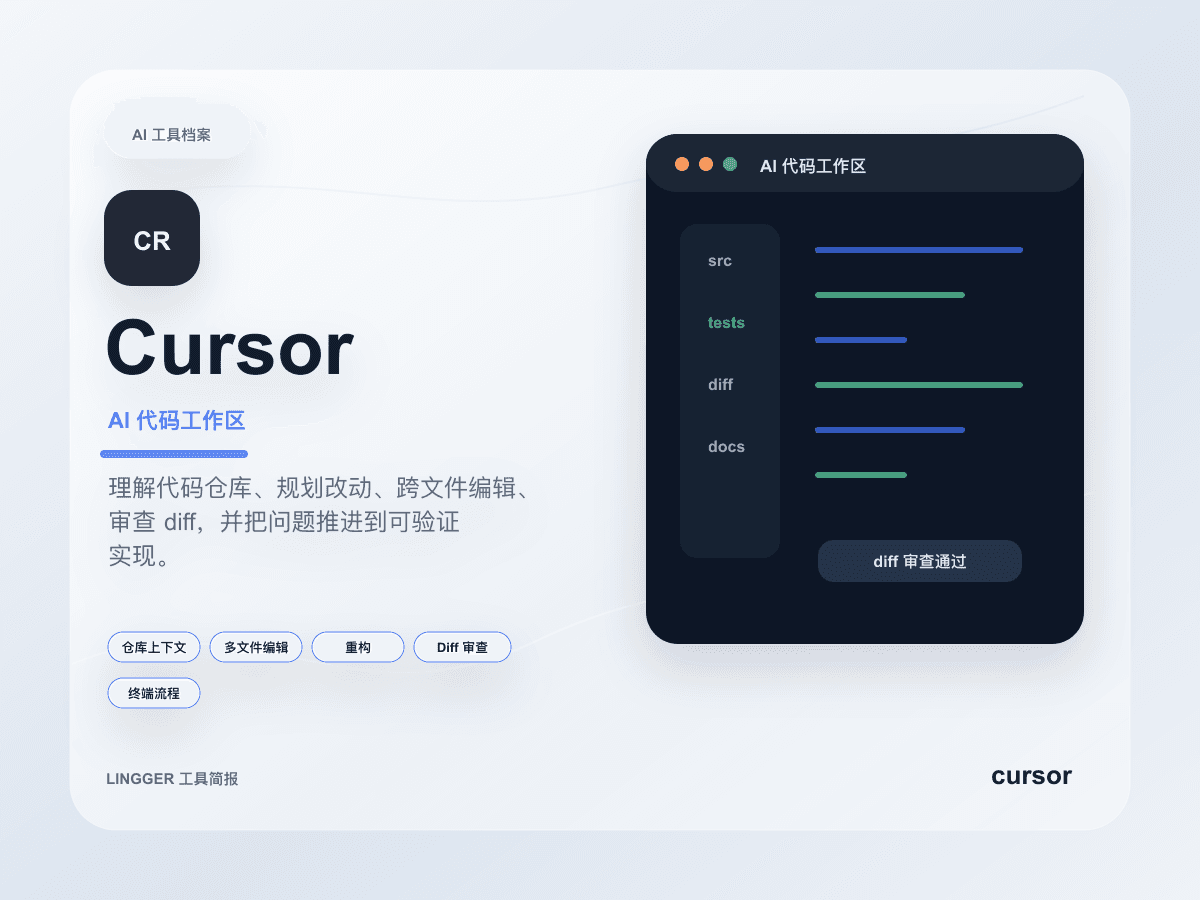
- Cursor is still strongest for repository-aware editing, refactors, explanations, and multi-file iteration inside an existing codebase.
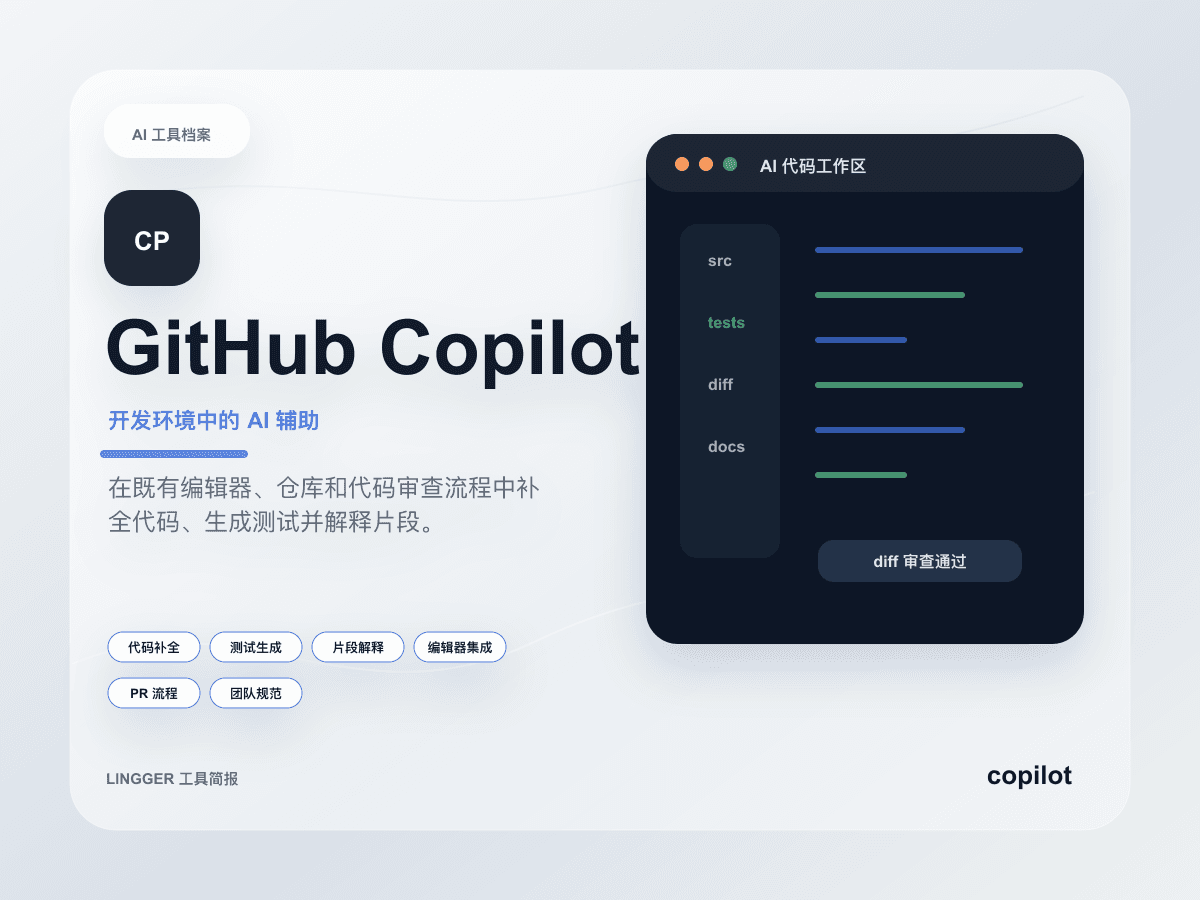
- GitHub Copilot is still strongest for low-friction completion and fitting into a familiar IDE and GitHub rhythm.
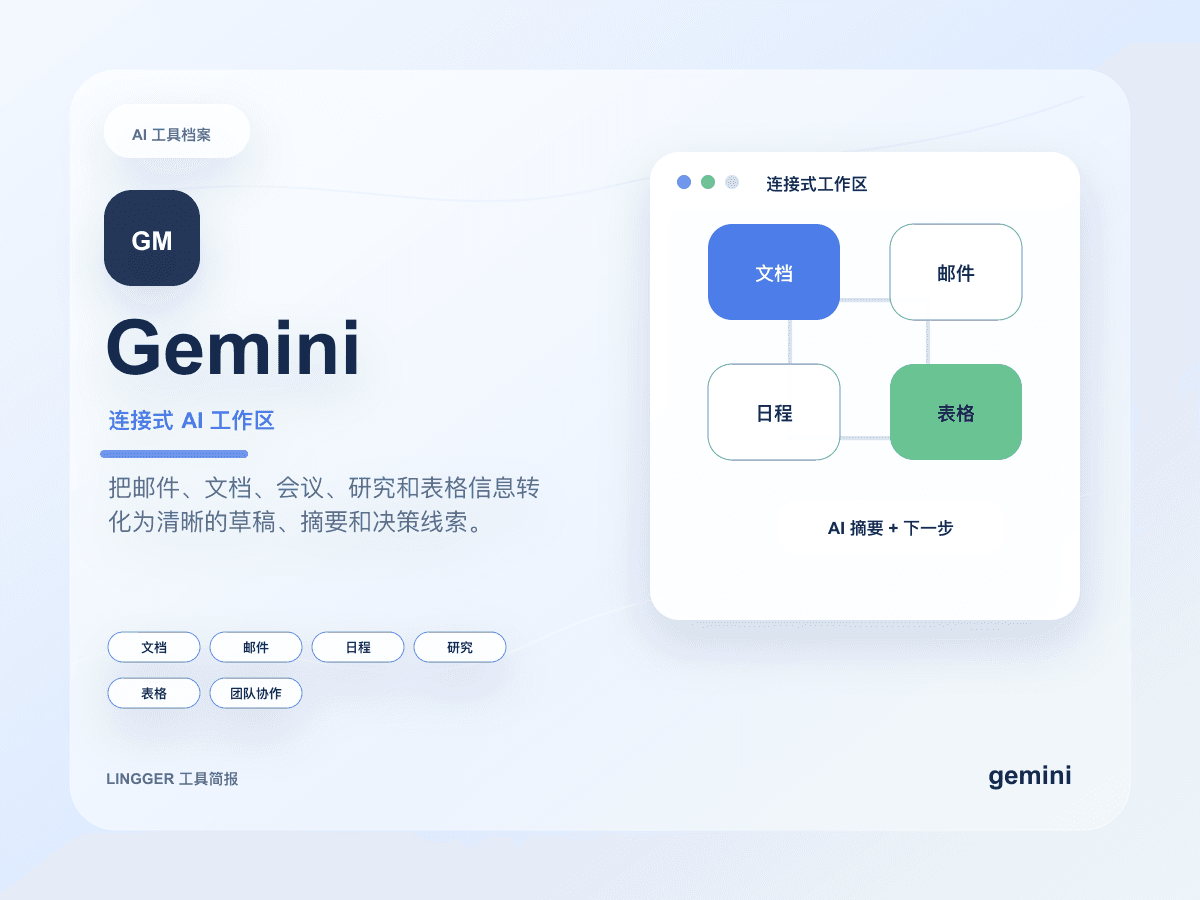
- Gemini, in this update, is trying to own the agent workbench plus platform substrate plus native Android generation entry point.
So this is not only about who writes better code. It is about whether you need:
- an assistant inside an existing repository,
- a platform that moves from idea to prototype to test track,
- or both working together.
For many teams, the realistic split will be:
- keep Cursor or Copilot for existing repository work and engineering diffs,
- use Gemini and Antigravity for from-scratch agent prototypes, cross-surface experimentation, and native Android prompt-driven development.
The deeper lesson is entry-point consolidation
The most useful thing to copy from this update may not be Android itself. It may be the idea of consolidating the agent development entry point.
Many teams still have a fragmented AI development setup:
- one browser chat,
- one IDE assistant,
- a few server-side scripts,
- and several disconnected automations.
That creates two obvious problems:
- broken context,
- and no clean handoff.
Google is proposing a different structure:
- use Antigravity 2.0 on desktop to manage agents,
- use the CLI in terminal-heavy workflows,
- use managed agents through the API,
- use AI Studio for rapid ideation and mobile capture,
- then push Android work forward through emulator,
adb, and Play test tracks.
That is more than a feature bundle. It is a clearer product architecture for agentic development. It also pressures other AI coding products to answer the same question: are they only model entry points, or are they becoming platforms that can hold an ongoing development loop?
Why only one post was published today
I checked several newer-looking OpenAI and Anthropic sitemap entries as well, but many of those lastmod timestamps reflect site rebuilds or broad page refreshes rather than truly new product events for May 23, 2026. By the standard in this automation, that is not enough to justify another daily hotspot post.
This Google story does meet the bar:
- it has a clear official source,
- a clear publication date,
- no same-level duplicate angle already in the repo,
- strong internal-link value for Gemini, Cursor, and GitHub Copilot,
- and direct relevance to AI coding teams and mobile app workflows.
So today it is better to publish one strong hotspot article than force weaker ones.
Sources:
- Google: Building the agentic future: Developer highlights from I/O 2026
- Android Developers Blog: Build native Android apps in Google AI Studio