Anthropic published Introducing Claude for Small Business on May 13, 2026. The real value is not simply that Claude now has a small-business package. The more important shift is that Anthropic bundled three layers together: connectors, ready-to-run workflows, and a “human approves before anything sends” delivery model.
If you already track tools like Claude and Make, it would be easy to dismiss this as another attempt to put a chatbot into SMB software. The official page points in a more useful direction. Anthropic is not asking owners to open yet another AI chat window. It is trying to turn finance, operations, sales, and marketing tasks into agentic workflows that sit on top of SaaS tools teams already use.
The meaningful change is the default delivery shape
Anthropic describes Claude for Small Business as a package of connectors and ready-to-run workflows. The launch page explicitly names Intuit QuickBooks, PayPal, HubSpot, Canva, DocuSign, Google Workspace, and Microsoft 365. More importantly, it is not framed as a toolkit that owners must assemble from scratch. Anthropic says it ships with 15 ready-to-run agentic workflows and 15 skills built around repeatable tasks that owners said slow them down most.
That changes how small teams should read the launch. Many teams keep general AI assistants at the draft-and-summary layer because the moment AI touches business systems, the friction rises fast: permissions, approvals, messy data, and accountability. Anthropic is trying to lower that threshold. Connect your existing tools, choose a workflow, let Claude prepare the work, and keep the final send, post, or payment behind a human approval.
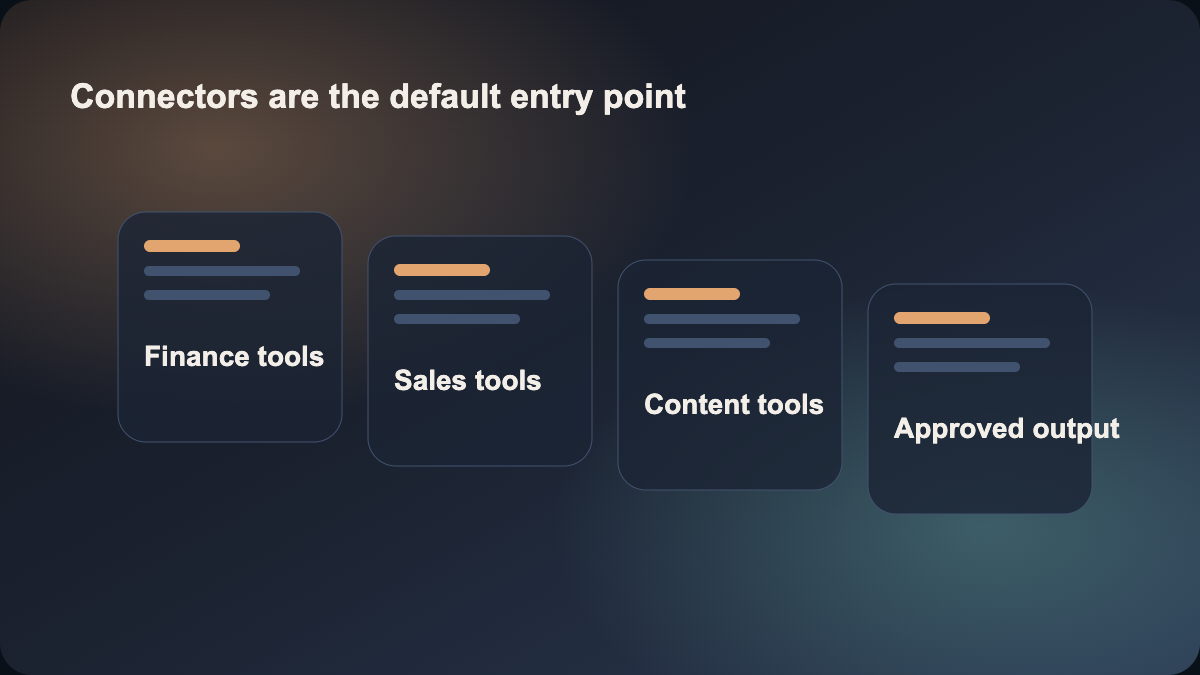
That is not the same thing as a general-purpose assistant that answers questions well. It is much closer to the product shape many readers of this site actually care about: AI sitting inside operating workflows, not just in a chat panel.
Why this has strong on-site value
Most readers here are not searching for the “smartest” model in the abstract. They are looking for practical help with tool selection and workflow design. Claude for Small Business matters because it is anchored in real tasks:
- payroll planning
- monthly close and reconciliation
- overdue invoice follow-up
- campaign planning and asset generation
- contract routing and status handling
The launch also keeps a clear human approval step. That matters for small teams more than flashy autonomy claims do. In practice, many teams want AI to do the prep work while people retain the final decision point.
That makes the story different from a broad ChatGPT positioning update. ChatGPT still reads as a general entry point for drafting, research, and exploration. Anthropic is trying to answer a narrower but more operational question: how do you package language intelligence into repeatable business actions? If your team already uses Make for triggers and structured data routing, this launch is worth tracking because it suggests what the next product layer may look like: not only explicit automation graphs, but pre-shaped agents that already understand the work.
How it differs from Make and Canva AI
The partner list might make this look like a wrapper around existing SaaS tools, but the operating model is different from Make or Canva AI.
Make is strongest when the workflow is explicit: triggers, branching, field mapping, and deterministic handoffs. Canva AI is strongest when a team needs visual assets quickly. Claude for Small Business is trying to fill the space between them: understand the context across tools, propose the work, and then hand it back to a person for approval.
That means:
- structured orchestration still belongs mostly to Make
- visual production still belongs mostly to Canva AI
- cross-tool synthesis, planning, summarizing, and drafting across systems is the layer Anthropic is targeting here
That is why this article links claude, make, and canva-ai instead of defaulting to a generic ChatGPT association. The on-site value is about real SMB workflow design, not about a generic model announcement.
Which teams should pilot this now
The best fit is not a massive enterprise with a full internal platform team. It is teams in the range where software sprawl is already real, but dedicated automation engineering is not:
- small companies with 10 to a few dozen people
- teams running finance, sales, marketing, and operations through multiple SaaS tools
- owners who want AI to move beyond chat without jumping straight to end-to-end autonomy
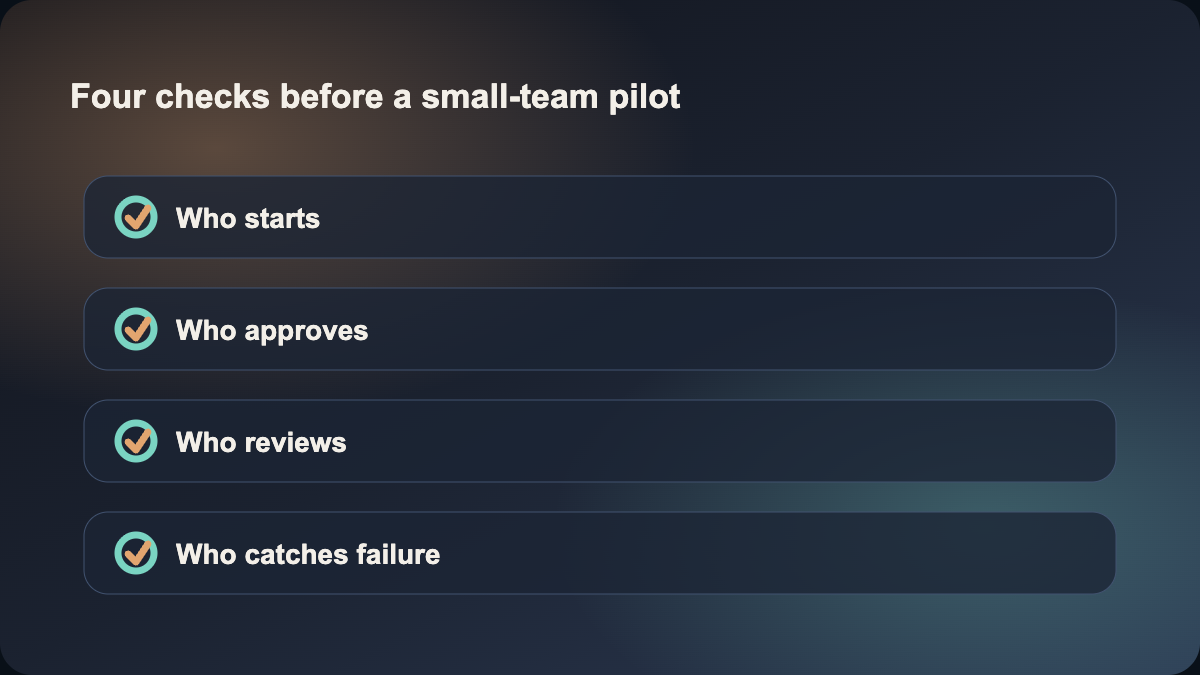
The most reusable lesson from the launch is the approval design. Anthropic repeats the same point throughout the page: you initiate the task, you approve the plan, and you approve before anything sends, posts, or pays. That is a much healthier default for small teams than pretending “fully autonomous” is the goal on day one.
If you want a comparison point inside this site, the closest published analogy is ChatGPT workspace agents and EKM. That OpenAI update leaned toward enterprise collaboration and governance. Anthropic’s launch leans toward ready-made operational jobs for smaller teams. Both point to the same broader shift: AI tool competition keeps moving from “which model is strongest” toward “which tool can put work inside an auditable, reviewable flow.”
Why this earns a slot today
This is a same-day-worthy story because the source is official, the publication date is explicit, and the site value is strong. It directly helps readers think about SMB workflow design, connectors, approval models, and when an AI product moves beyond a chat window into something operational.
That also explains why this run stops at two articles instead of forcing a third. The remaining candidates today were either too broad, too promotional, or too weakly connected to the site’s tool-selection value. This story clearly clears the bar.
Source:
- Anthropic: Introducing Claude for Small Business