Google published A new era for AI Search on May 19, 2026. If you read it only as “AI Mode got another upgrade,” you miss the bigger move. Google is not only making search feel more conversational. It is explicitly pushing Search toward agents, persistent tracking, and lightweight action flows.
That matters because the category comparison changes. For site readers comparing Perplexity, Gemini, and ChatGPT, the question can no longer stop at “which one answers questions best.” The question now includes who can monitor a topic over time, break down a comparison problem, surface ongoing changes, and in some cases move the task a little further forward.
What actually changed
The official post is dense, but several points stand out:
- Google says AI Overviews now reach 1.5 billion monthly users.
- In the U.S. and India, AI Overviews increase usage on relevant query types by more than 10%.
- Gemini 3.5 Flash is becoming the default model in Search and rolling out globally.
- Search is gaining a stronger intelligent search box and deeper comparison behavior.
- Google says information agents are coming this summer for Google AI Pro and AI Ultra users.
- The announcement also highlights more agent-like shopping, ticketing, and appointment actions.
- Google showcases interactive mini apps generated with Antigravity, plus deeper personal context and broader language support.
The directional point is clear: Search is moving from returning an answer toward continuing a task.
Why this is not the same job as Perplexity or ChatGPT
Perplexity is still strong when you want cited public-web research in a compact interface. ChatGPT is still strong when the search result needs to become a plan, a summary, a memo, or a draft. Gemini keeps gaining leverage inside Google’s broader ecosystem.
Google Search is pushing from a different strategic position. It is turning the native search surface itself into an agent interface.
That means the split becomes clearer:
- cited public research and answer-first investigation: Perplexity stays compelling
- cross-task synthesis, writing, and flexible follow-up: ChatGPT stays strong
- native discovery, persistent monitoring, and consumer action flows: Google Search is leaning into its home-field advantage
So this should not be read as “Google caught up to X.” It should be read as a sharper division of labor inside AI search.
What SEO, research, and intelligence teams should learn from it
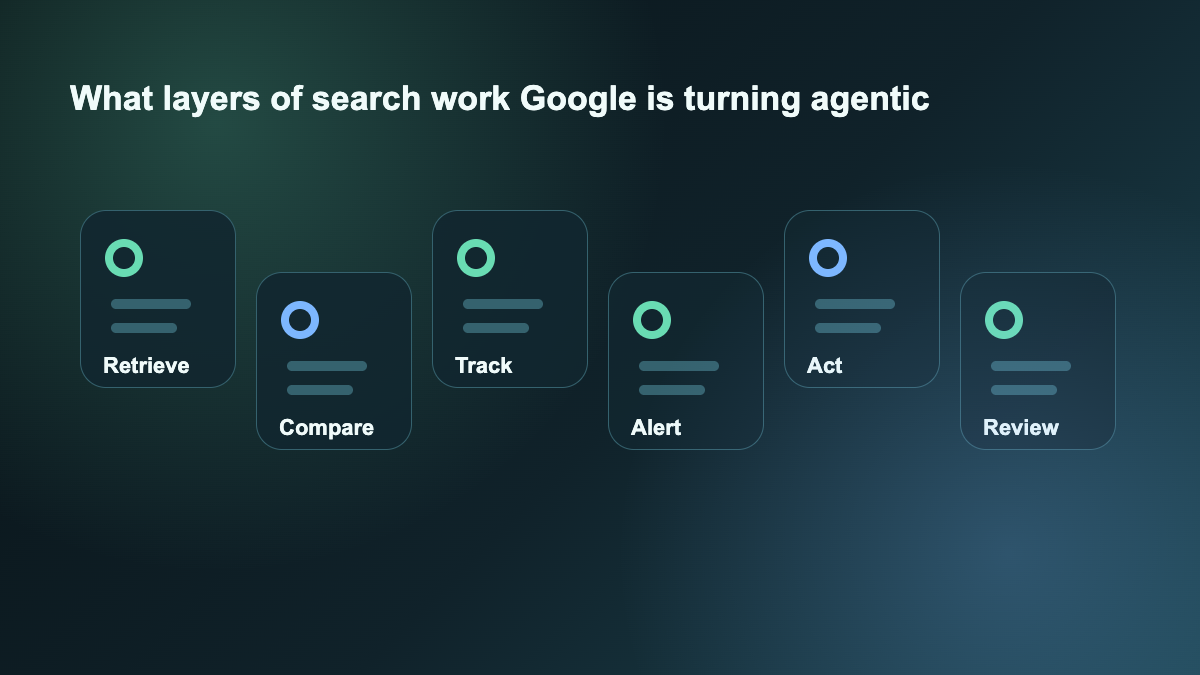
The most useful thing to copy from this update is not a specific demo. It is the task model. Search-heavy work now splits more cleanly into three layers:
- retrieval: who finds the right material with usable freshness and traceability
- monitoring: who can keep watching a topic so you do not have to restart the search each time
- action: who can push a comparison, booking, or decision process further forward
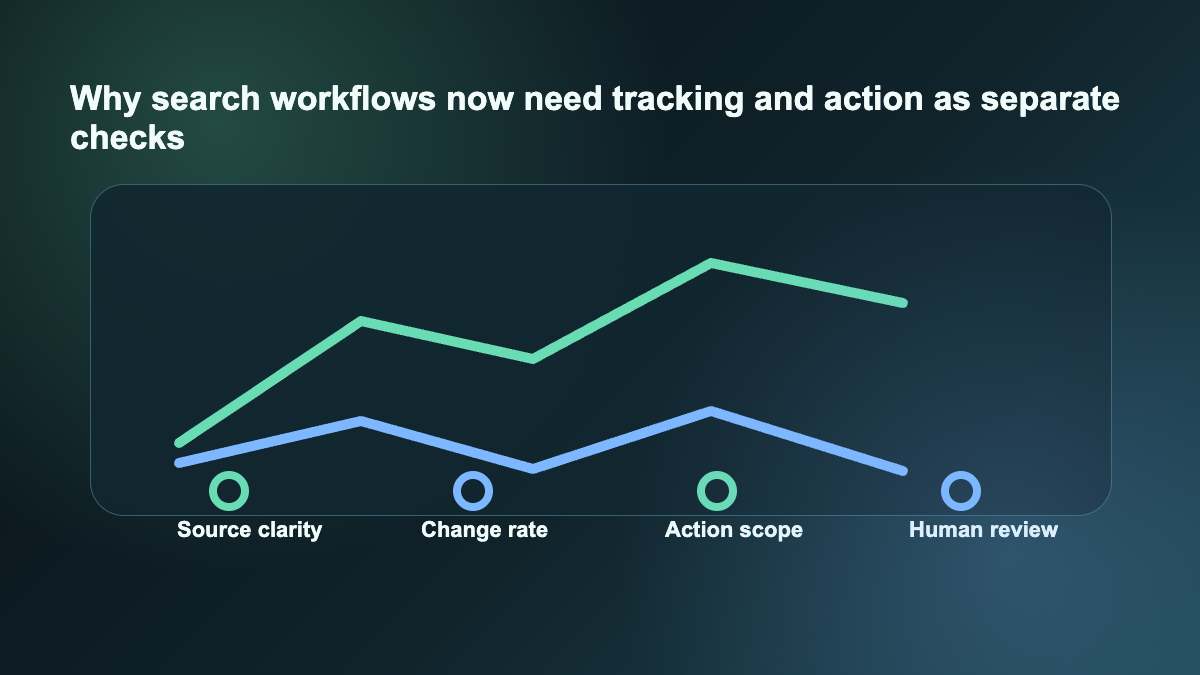
Google’s update matters because it formally brings layers two and three into the product story. For many teams, that matters more than whether the prose sounds more natural. If you buy or adopt search AI for real workflows, “persistent tracking” and “agent action” now deserve their own rows in the evaluation table.
What to test right now
Use a real problem, not an abstract showcase. Good tests include:
- tracking price and review changes in a product category
- monitoring industry announcements or policy shifts
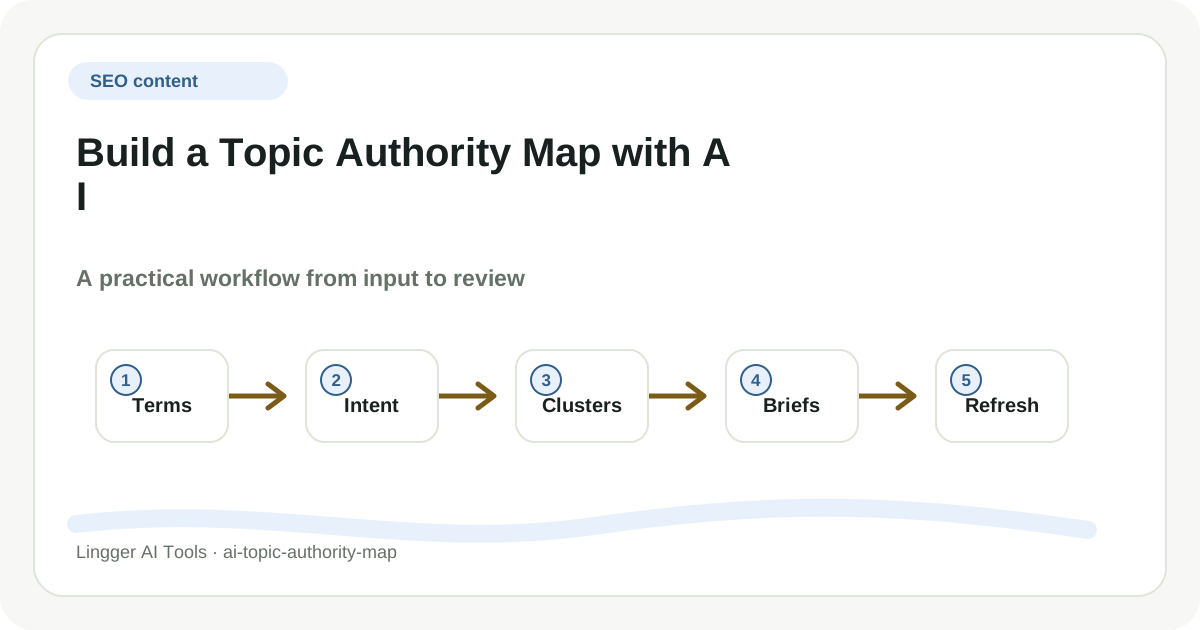
- comparing a cluster of search intents behind a keyword theme
- walking through a booking, registration, or purchase-adjacent journey
Then judge three things: whether it saves time over manual searching, whether the reasoning and sources are transparent enough, and whether the action layer goes too far on your behalf.
If you run a team, this update is best read alongside:
- Best AI SEO tools in 2026
- AI SEO keyword clustering workflow
- Why the Open Agent Leaderboard is worth watching
The real change is not only in product UX. It is in how a search agent fits into a workflow. “Look something up” and “keep watching something for me” are becoming different jobs.
This topic is worth publishing because Google is no longer only making Search feel more like a chat product. It is making Search behave more like a working agent layer.
Reference:
- Google: A new era for AI Search