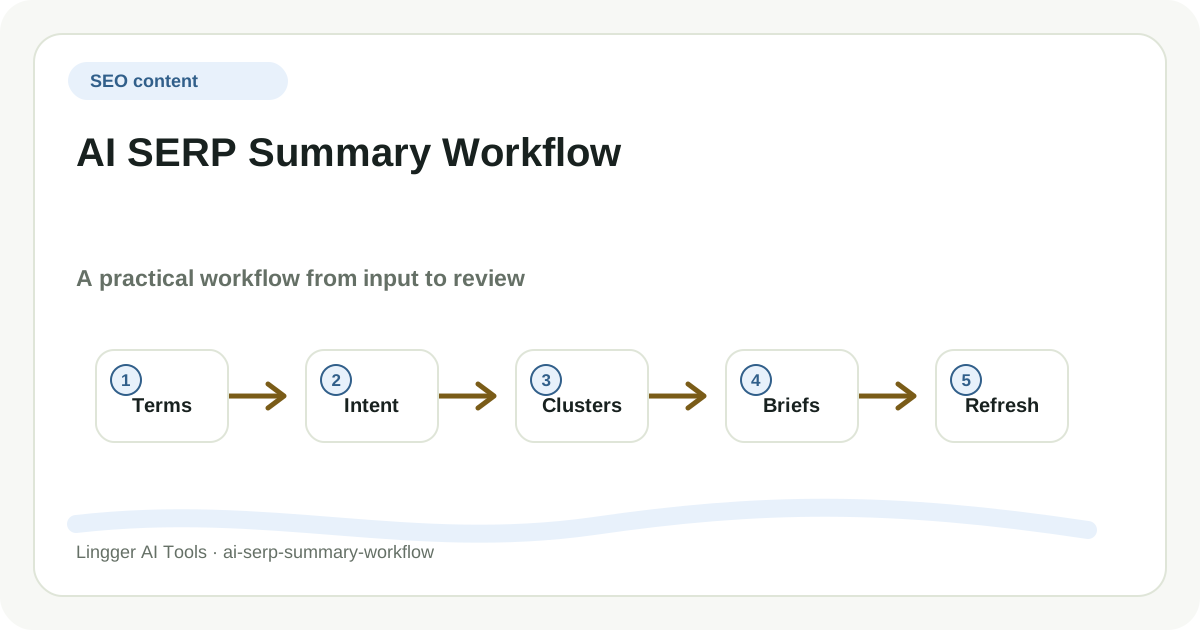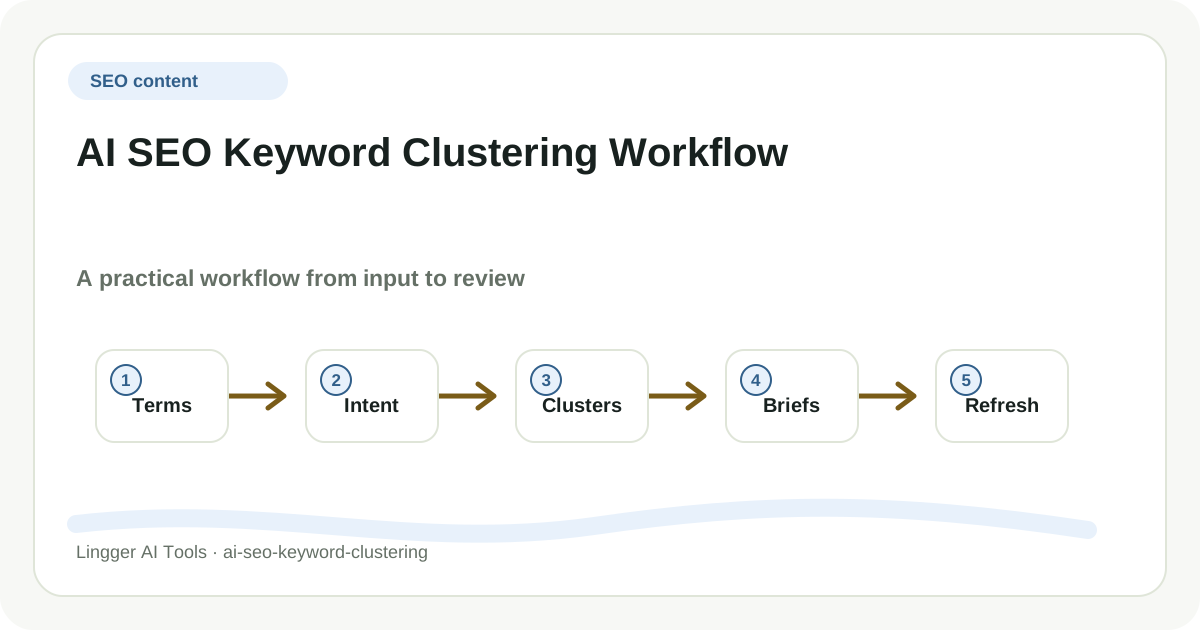
AI keyword clustering is not just asking a model to group similar phrases. A useful clustering workflow answers four page decisions: which terms share the same intent, which terms deserve separate pages, which terms should be merged into an existing page, and which terms should be ignored for now.
This guide is for SEO practitioners, content leads, indie site owners, and small teams building topic maps. You need a keyword list, a few competing URLs, current site URLs, and a human reviewer. Use Semrush for keyword and competitor research, Perplexity for reader questions, and ChatGPT for the first clustering pass.
Search intent and inputs
People searching for “how to use AI for keyword clustering” want an operational tutorial. The goal is not a prettier spreadsheet. The goal is a decision: create, merge, refresh, internally link, or defer.
Prepare these fields before prompting: keyword, search volume or relative demand, current ranking URL if any, competing page, SERP page type, business priority, and notes. You can run a first pass without perfect volume data, but you still need intent and page-type observations.
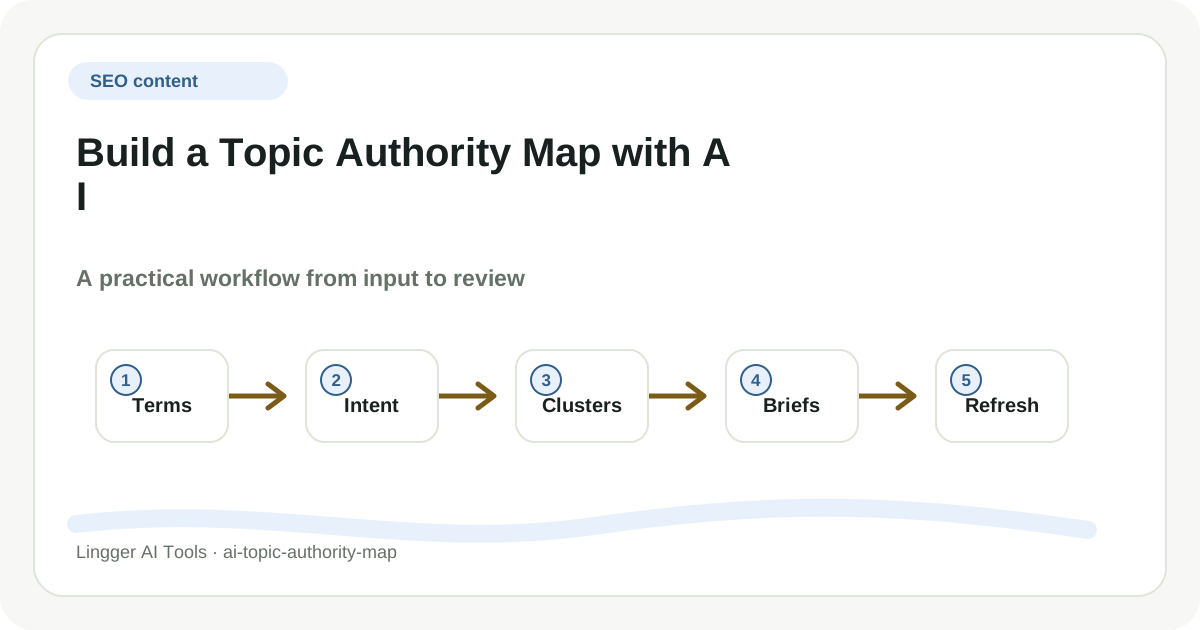
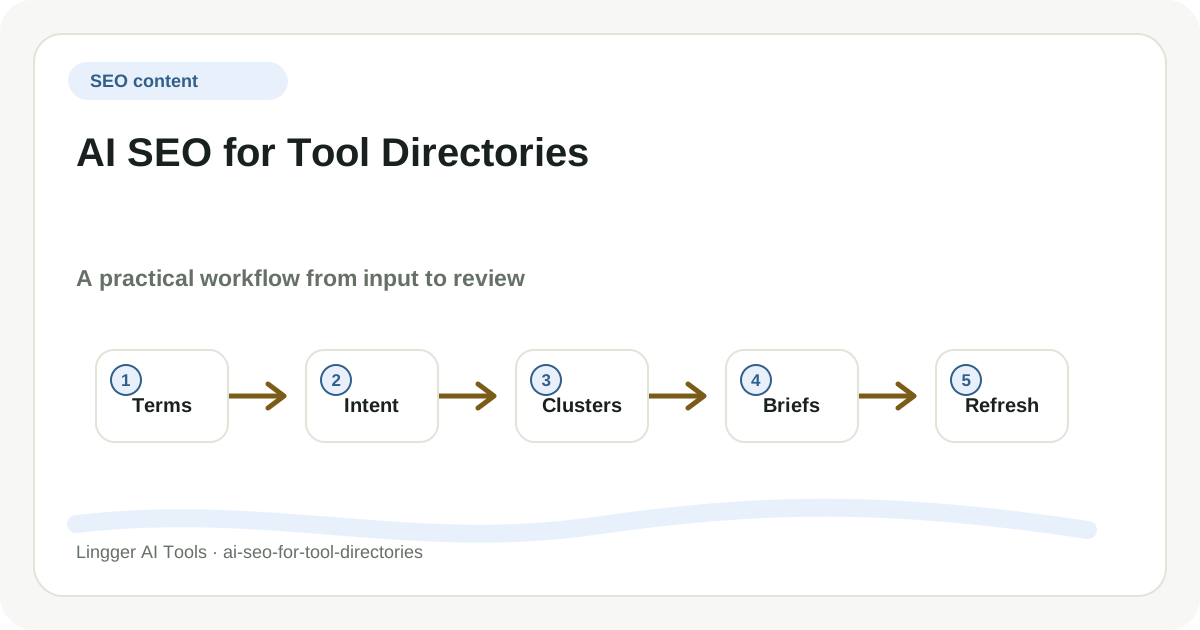
Step-by-step workflow
- Export keywords from Semrush, Ahrefs, Search Console, site search, or a campaign spreadsheet.
- Remove irrelevant terms, misspellings that do not matter, unsupported regions, and obvious duplicates.
- Sample the SERP and label page type: guide, tool page, comparison, template, listicle, tutorial, or glossary.
- Ask AI to cluster by search intent, not by word similarity.
- Require an action for each cluster: create, merge, refresh, internally link, or defer.
- Manually sample 3 to 5 terms in each cluster, especially cases where similar words imply different page formats.
- Convert approved clusters into briefs, refresh tasks, or internal link updates.
Output table
| Field | Example | Review question |
|---|---|---|
| cluster_name | AI SEO tools comparison | Does this group share one intent? |
| primary_keyword | best ai seo tools | Does it represent the page promise? |
| supporting_keywords | ai seo software, seo ai tools | Do these belong on the same page? |
| page_type | listicle / comparison / tutorial | Does the SERP support this format? |
| action | create / refresh / merge / link | Is there an existing page to use? |
| internal_links | /en/blog/best-ai-seo-tools | Do the targets exist? |
| confidence | high / medium / low | Does low confidence need a manual SERP check? |
This table is more useful than a paragraph summary because it can move into a brief, project board, or editorial queue. Pair it with an AI SEO brief template once a cluster is approved.
Prompt template
You are an SEO content strategy assistant. Cluster the keyword table below by search intent.
Do not group only by word similarity. Each cluster must include: cluster_name, primary_keyword, supporting_keywords, page_type, recommended_action, existing_url, internal_link_targets, confidence, human_review_notes.
If two terms look similar but require different page formats, split them.
If an existing page can satisfy the intent, prefer refresh or internal linking instead of creating a new page.
Keyword table: {paste table}
Existing site URLs: {paste URL list}
Keep uncertainty visible. The first AI pass will be wrong in places, especially with abbreviations, brand terms, region modifiers, and comparison queries. The prompt should surface those weak spots instead of hiding them in confident prose.
Practical scenarios
Before writing a listicle like best AI SEO tools, cluster terms such as “best ai seo tools,” “ai seo software,” “surfer seo alternatives,” and “semrush vs ahrefs.” Some belong in a listicle, some in a comparison page, and some in an alternative page. One article should not absorb every intent.
For comparison pages, clustering should separate comparison intent, alternative intent, pricing intent, and feature-specific intent. “semrush pricing,” “ahrefs backlinks,” and “semrush vs ahrefs” may need different sections or different pages.
For content refreshes, clustering can become an internal link plan. If “Perplexity alternatives” and “AI search tools” overlap, link the pages where the overlap helps the reader. Do not add links just because the keywords share a word.
Review checklist
- Does each cluster have one dominant search intent?
- Does the page type match real ranking pages?
- Is there an existing URL that should be refreshed instead of creating a new page?
- Do brand, region, pricing, or fast-changing terms need separate review?
- Did AI merge terms that look similar but require different formats?
- Can the output become a brief, refresh task, or internal link task immediately?
Keyword clustering is useful when it prevents wrong pages. AI can speed up grouping, but page decisions still depend on real SERPs, current site assets, and business priority.