OpenAI published A new personal finance experience in ChatGPT on May 15, 2026. If you read it only as “ChatGPT now does personal finance,” you miss the more important product signal. What matters to readers of this site is not budgeting advice by itself. It is that OpenAI is continuing to turn a general assistant into a more vertical, more bounded, and more workflow-shaped product.
The official post is explicit about scope. This is a preview for U.S. ChatGPT Pro users. It starts on web and iOS. Users can connect financial accounts, view a dashboard inside ChatGPT, and ask questions grounded in their own financial context. OpenAI also states three boundaries clearly: the rollout is limited, account linking currently goes through Plaid with Intuit support coming soon, and ChatGPT cannot see full account numbers or make changes to the accounts.
That makes this more than a consumer feature update. If you have been comparing ChatGPT with Claude and other general assistants, this launch is better read as a product-shape story. Future competition is not only about who answers better. It is increasingly about who can turn a messy, high-context job into a bounded, reusable experience with the right data layer and the right action edges.
What actually changed
OpenAI gives enough specifics to make this worth covering:
- the publication date is May 15, 2026
- the preview is for U.S.
ChatGPT Prousers - rollout begins on web and iOS, not everywhere at once
- account connection runs through Plaid, with Intuit support coming soon
- support starts with more than 12,000 financial institutions
- users can open
Financesfrom the sidebar or invoke it with@Finances - ChatGPT can access balances, transactions, investments, and liabilities, but cannot see full account numbers or change account state
- finance conversations default to
GPT-5.5 Thinking - OpenAI reports an internal personal-finance benchmark where
GPT-5.5 Thinkingscored 79/100 andGPT-5.5 Proscored 82.5/100
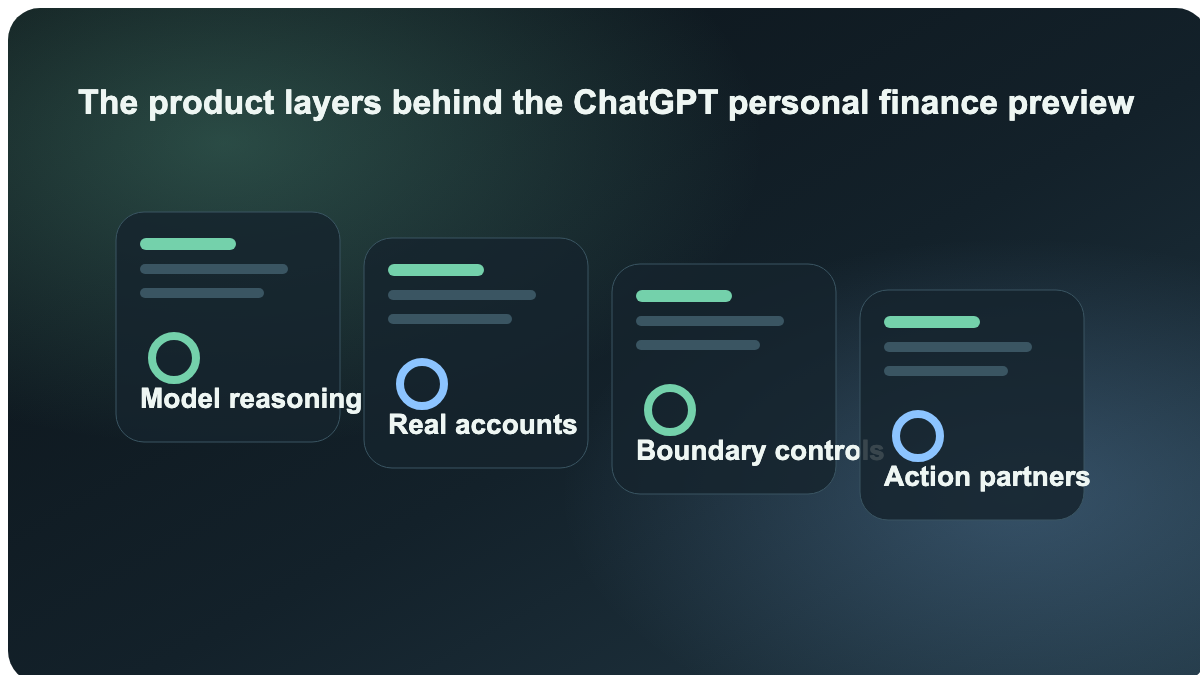
Put together, that is not just “AI financial advice.” It is a fuller product chain: account connection, persistent financial context, a dedicated dashboard, reasoning over real user data, and a path toward partner-backed actions later on.
Why this is not the same as ordinary finance Q&A
People were already asking ChatGPT about budgets, travel costs, savings plans, and investment tradeoffs before this launch. OpenAI even says more than 200 million people come to ChatGPT each month for money-related questions. But that older use pattern was still general-purpose Q&A without real connected context.
This update changes two things at once:
- The answer can be grounded in connected accounts, financial memories, and user goals rather than only the text typed into the prompt.
- The product no longer lives only as a blank chat box. It now has a dedicated
Financesentry point, its own connection flow, and a consolidated dashboard.
That is the part site readers should care about. Many AI products will likely follow the same path: first general Q&A, then connected context, then a dedicated workspace, then trusted action partners. It is structurally similar to what we described in ChatGPT workspace agents and EKM, except that one was enterprise workflow infrastructure and this one is a consumer finance vertical.
The real lesson is how a general assistant grows into a vertical workflow
OpenAI’s launch effectively shows a reusable product template:
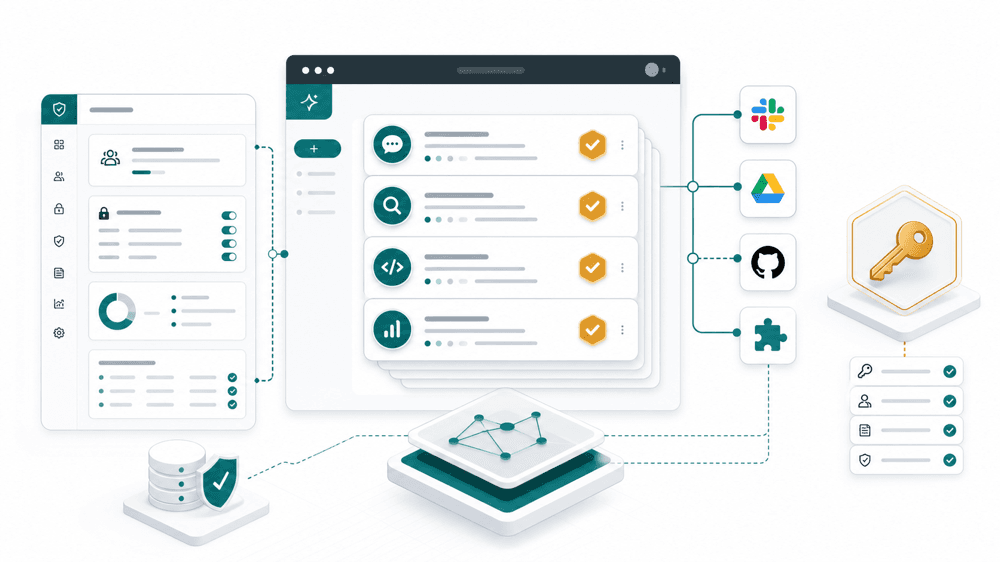
- a general model layer, here centered on
GPT-5.5 Thinking - a real-world context layer, including accounts, memories, goals, and user constraints
- a bounded-control layer, including no account changes, disconnect controls, 30-day deletion for synced account data, and temporary chats that do not access connected financial accounts
- a possible action layer, where OpenAI explicitly points to ecosystem partners like Intuit for things such as approval odds, tax estimates, or scheduling a local expert
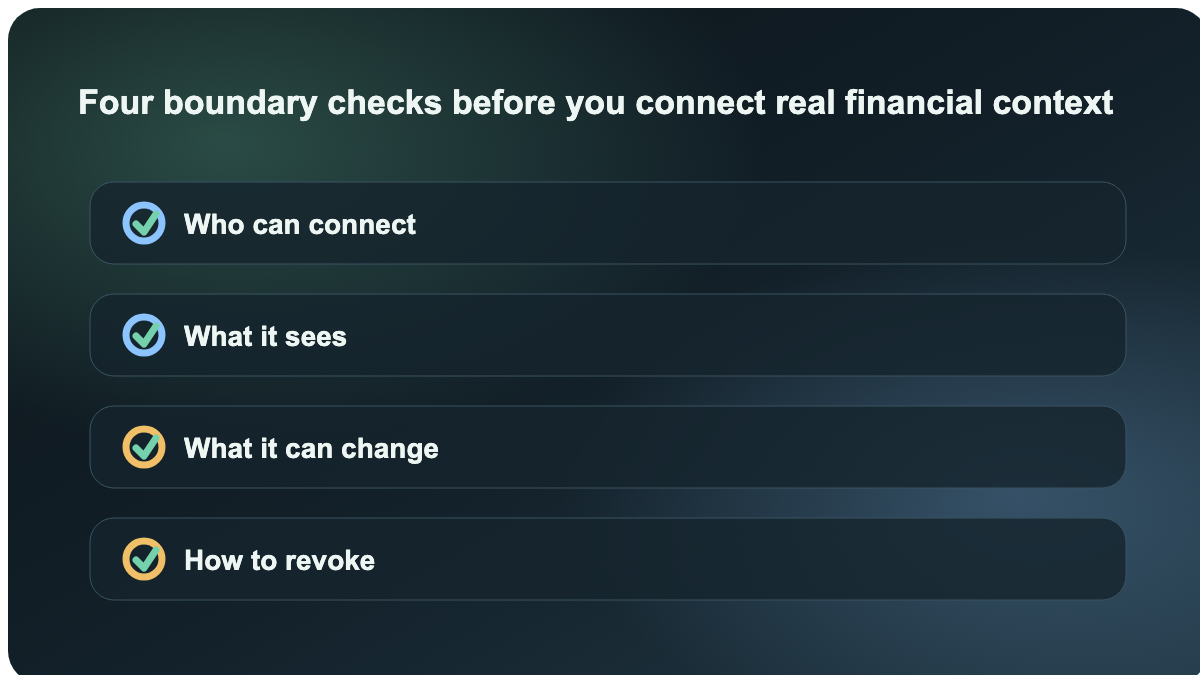
Those layers together are what make this interesting. Without them, this would be a smarter chatbot. With them, it starts to look like a vertical product surface.
That gives site readers a sharper evaluation lens for any general AI product:
- Does it have a context layer that belongs to the actual job?
- Does it define clear boundaries and reversibility?
- Does it stop at advice, or does it already point toward trusted actions?
- Is the user getting only a chat box, or a durable workflow entry point?
What this means for users and teams
For ordinary users, this does not mean “hand over your financial decisions to ChatGPT.” OpenAI explicitly says it is not a replacement for professional financial advice. The better interpretation is narrower: once a general assistant gets access to real personal context, it can become more useful on complex, detail-dependent questions, but only if the product also gets much stricter about privacy, control, and error boundaries.
For product teams and operators, this launch is even more interesting. It suggests that “general assistant verticalization” is no longer a vague strategy deck phrase. It is a visible product route:
- start with a high-frequency, high-context question area
- pull it out of the generic chat box into a dedicated surface
- connect real context instead of relying only on typed background
- then add trusted partners to move from answers toward actions
That points in the same broader direction as Claude for Small Business. Anthropic is packaging ready-made small-team workflows. OpenAI is packaging a personal finance vertical. Both suggest that general AI products are being pushed toward domain-shaped experiences.
What to pay attention to next
The most useful takeaway is not the budgeting feature itself. It is the evaluation framework this launch suggests. Whether the next vertical is healthcare, legal, education, recruiting, or enterprise controls, the important questions will look similar:
- Where does the context come from, and can the user revoke it?
- What can the model actually see, and what can it not see?
- Is the system still only advising, or is it starting to trigger downstream actions?
- If actions are involved, where are the partner boundaries, human approvals, and accountability lines?
If you are comparing ChatGPT and Claude today, this launch does not instantly settle which one is better for writing or planning. What it does change is the product-roadmap lens. Increasingly, the more important question may be which general assistant can most effectively become a context-rich, bounded, and action-aware vertical layer in a real workflow.
Sources:
- OpenAI: A new personal finance experience in ChatGPT
- OpenAI News: Product releases