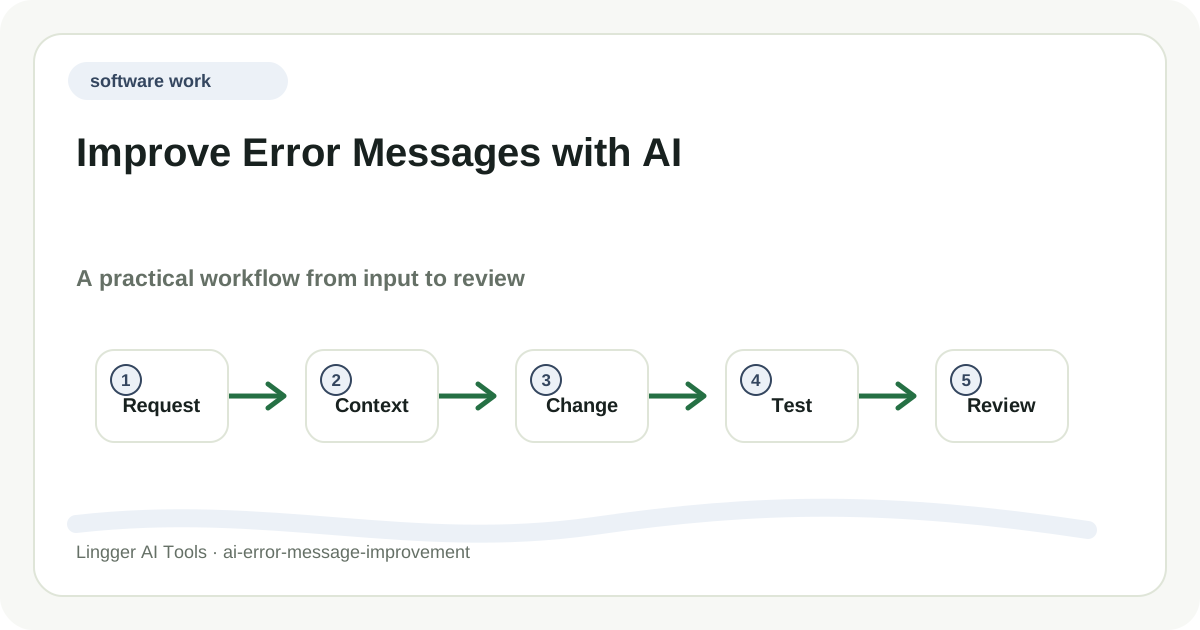
Improve Error Messages with AI should make the codebase easier to reason about, not merely produce more code-shaped text. AI is helpful when it narrows review attention, exposes assumptions, and turns scattered context into a task a developer can verify locally.
I would not ask ChatGPT to solve Improve Error Messages with AI as one oversized request. A better setup gives each tool a narrower job, keeps the source material visible, and leaves a review trail that another teammate can follow without reading the whole chat transcript.
Start with the real handoff
For Improve Error Messages with AI, the first question is which engineering decision needs help. Are you trying to understand existing behavior, draft a change plan, inspect a diff, or prepare tests? Each of those jobs needs different inputs. A model that has no file paths, constraints, or failure examples will fill gaps with plausible guesses.
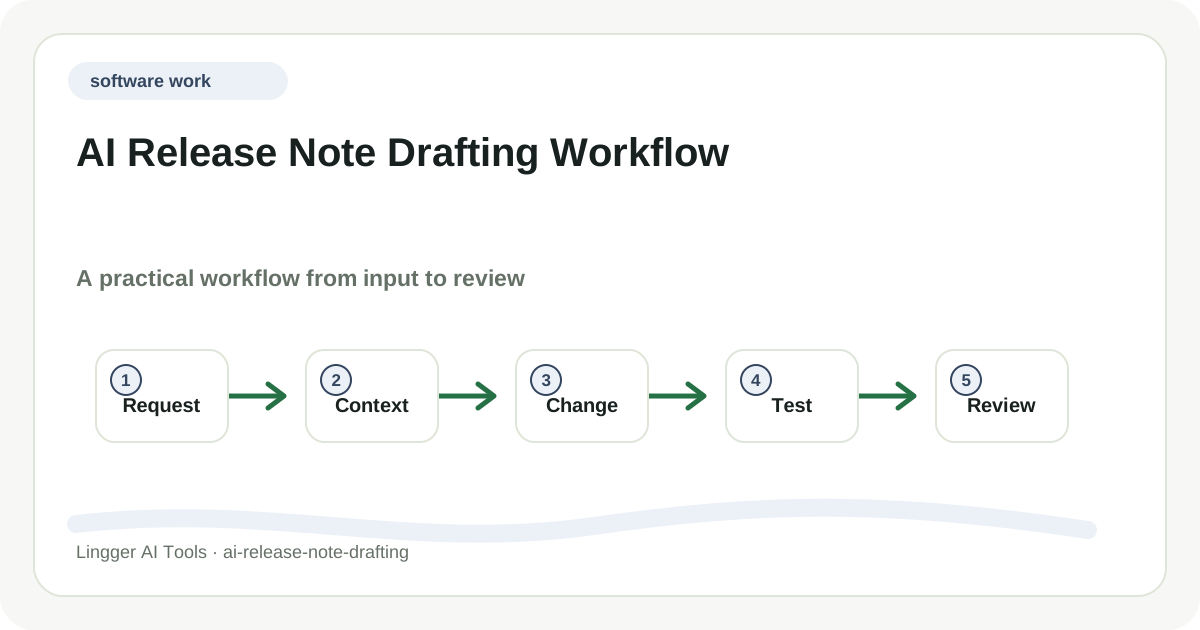
A small first run is enough. Pick one real example, one owner, and one visible output. For Improve Error Messages with AI, that means the result should name what was provided, what the model changed, what still needs a human call, and where the work goes next. If those pieces are missing, the output may be fluent, but it is not operational.
Build the working surface
A dependable Improve Error Messages with AI workbench includes the relevant files, the expected behavior, the risky edge cases, and the verification command. Keep those pieces visible. They stop the conversation from drifting into generic advice and give the reviewer a way to trace every recommendation back to something in the repository.
ChatGPT can help frame the engineering question, but Improve Error Messages with AI still depends on repository evidence. I would use the second tool to challenge assumptions, missed edge cases, or unclear naming, then let the final assistant assist only where local files and verification commands are explicit. The handoff should read like a review note a developer can test.
Prompt for decisions, not decoration
For Improve Error Messages with AI, I would use ChatGPT to summarize the task and suspected risk, the second assistant to challenge the reasoning or search for missed cases, and the editor only where it can see the local files and tests. The prompt should ask for file-specific notes, not broad best practices.
A good prompt for Improve Error Messages with AI also asks the model to label uncertainty. I want separate sections for confirmed input, proposed output, assumptions, and questions for the human reviewer. That format is less theatrical than a single polished answer, but it is much easier to improve after the first run because weak inputs and weak reasoning are visible.
Review before reuse
Review Improve Error Messages with AI with the same skepticism you would apply to a teammate’s patch. Does the output name the exact behavior under review? Does it distinguish confirmed code facts from assumptions? Does it include tests or manual checks that would fail if the advice is wrong? If not, the AI result is still a draft.
Product details still need a separate check. ChatGPT can change feature names, pricing, limits, and availability. For Improve Error Messages with AI, the durable advice is the workflow: where the tool belongs, what evidence it needs, what humans must verify, and how the team records what it learned.
Make the first loop small
Try Improve Error Messages with AI on a small change before using it on a risky migration. Give the model one diff, one bug report, or one module boundary, then run the proposed checks yourself. Save the useful review prompts beside the team’s normal development notes so the process improves with the codebase rather than floating above it.
After a few passes, Improve Error Messages with AI should leave behind more than output. It should leave examples, rejection notes, and a sharper prompt that reflects how the team actually works. That is the sign the workflow is becoming reusable: not because every paragraph sounds the same, but because each run makes the next decision easier.