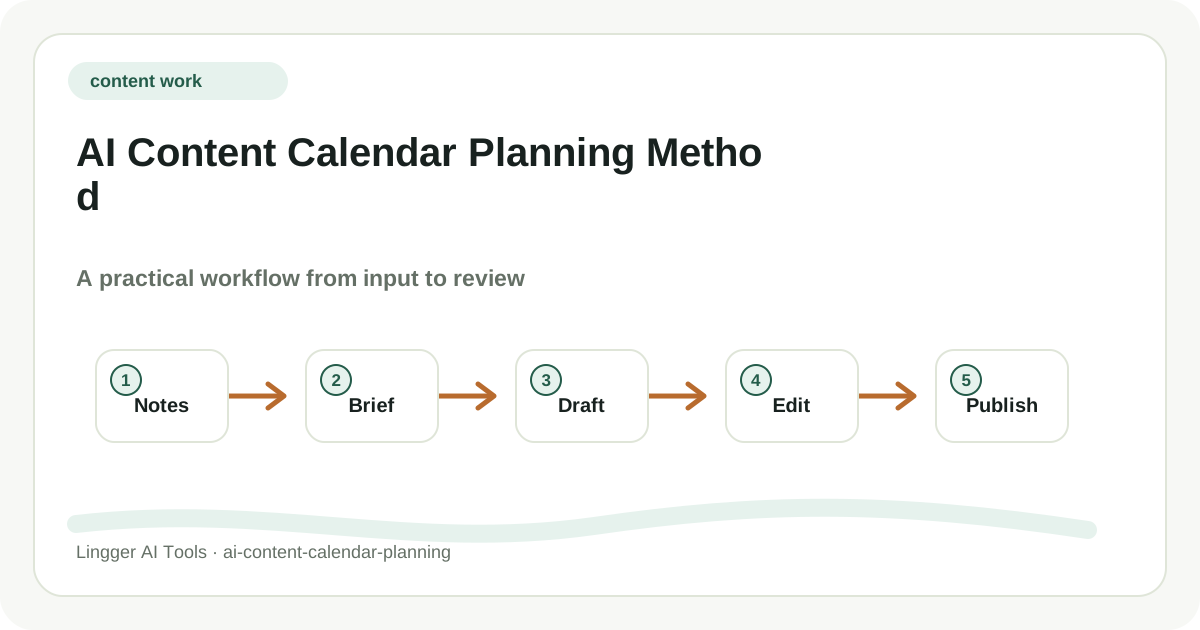
AI Content Calendar Planning Method is strongest when it protects the reason a piece exists. AI can draft quickly, but the team still has to decide audience, evidence, tone, and the action the reader should take after finishing the page.
I would not ask Notion AI to solve AI Content Calendar Planning Method as one oversized request. A better setup gives each tool a narrower job, keeps the source material visible, and leaves a review trail that another teammate can follow without reading the whole chat transcript.
Start with the real handoff
For AI Content Calendar Planning Method, define the reader before opening the prompt. Is the output for an editor, a subject-matter expert, a customer, or a sales teammate? Each reader needs different context. A draft that sounds smooth but ignores the reader’s job will create more revision work than it saves.
A small first run is enough. Pick one real example, one owner, and one visible output. For AI Content Calendar Planning Method, that means the result should name what was provided, what the model changed, what still needs a human call, and where the work goes next. If those pieces are missing, the output may be fluent, but it is not operational.
Build the working surface
A sturdy AI Content Calendar Planning Method workbench contains the source notes, the angle, the voice constraints, and the review checklist. Source notes keep the draft honest. The angle prevents generic structure. Voice constraints protect brand language. The checklist gives the editor a way to approve substance before polishing sentences.
Notion AI can organize the first draft, but AI Content Calendar Planning Method should still protect the reader’s job. the second tool is useful for questioning weak evidence or unclear structure, and the final assistant can reshape the approved direction into the final format. The workflow works when each tool improves an editorial decision instead of merely smoothing prose.
Prompt for decisions, not decoration
For AI Content Calendar Planning Method, use Notion AI to organize raw material, the second tool to question gaps or unsupported claims, and the editor to reshape the piece into the required format. The prompt should ask for missing evidence and editorial risks, not just a cleaner draft.
A good prompt for AI Content Calendar Planning Method also asks the model to label uncertainty. I want separate sections for confirmed input, proposed output, assumptions, and questions for the human reviewer. That format is less theatrical than a single polished answer, but it is much easier to improve after the first run because weak inputs and weak reasoning are visible.
Review before reuse
Review AI Content Calendar Planning Method by checking whether the output would still make sense if the tool name were removed. The reader should see a clear promise, evidence for that promise, and a next step. If the piece depends on generic AI enthusiasm, send it back to the source notes before editing style.
Product details still need a separate check. Notion AI can change feature names, pricing, limits, and availability. For AI Content Calendar Planning Method, the durable advice is the workflow: where the tool belongs, what evidence it needs, what humans must verify, and how the team records what it learned.
Make the first loop small
Start AI Content Calendar Planning Method with one real asset: a brief, a messy transcript, a product note, or an outline that already matters. Run the workflow once, mark the places where human judgment changed the result, and keep those notes as the next prompt’s constraints. That is how a writing workflow becomes a craft aid instead of a content mill.
After a few passes, AI Content Calendar Planning Method should leave behind more than output. It should leave examples, rejection notes, and a sharper prompt that reflects how the team actually works. That is the sign the workflow is becoming reusable: not because every paragraph sounds the same, but because each run makes the next decision easier.