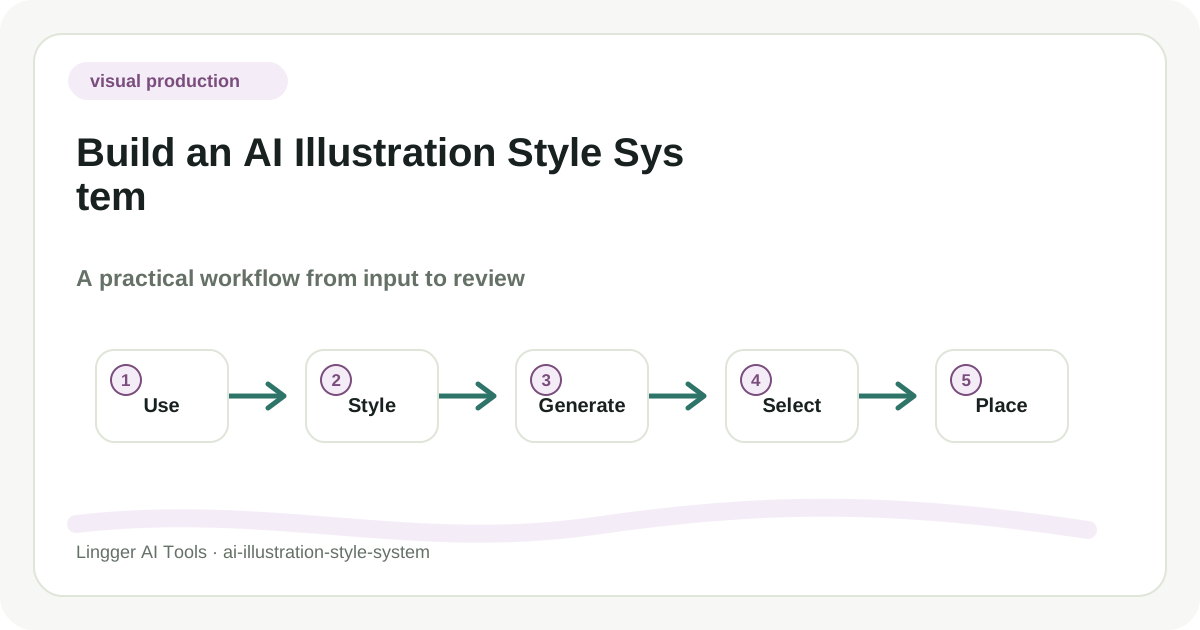
Build an AI Illustration Style System should make visual choices easier to brief, compare, and approve. Image generation is tempting because it produces something visible fast, but the useful workflow is the one that keeps purpose, format, rights, and brand constraints in view.
I would not ask Canva AI to solve Build an AI Illustration Style System as one oversized request. A better setup gives each tool a narrower job, keeps the source material visible, and leaves a review trail that another teammate can follow without reading the whole chat transcript.
Start with the real handoff
For Build an AI Illustration Style System, begin with where the image will live. A hero image, ad test, product mockup, poster, and thumbnail all need different space, copy treatment, aspect ratio, and review criteria. If the output does not name the placement, the team cannot judge whether it is usable.
A small first run is enough. Pick one real example, one owner, and one visible output. For Build an AI Illustration Style System, that means the result should name what was provided, what the model changed, what still needs a human call, and where the work goes next. If those pieces are missing, the output may be fluent, but it is not operational.
Build the working surface
A clear Build an AI Illustration Style System workbench includes the visual brief, reference boundaries, production constraints, and approval notes. The brief describes the job of the image. Boundaries explain what not to imitate. Constraints cover dimensions, text space, and export needs. Approval notes capture why one version is safe to use.
Canva AI can explore visual direction, but Build an AI Illustration Style System is judged in placement, not in the prompt window. the second tool can adapt layout or brand constraints, and the final assistant can help prepare review notes for production. Keeping those roles separate prevents an attractive draft from skipping size, rights, or approval checks.
Prompt for decisions, not decoration
For Build an AI Illustration Style System, use Canva AI to explore the first visual direction, the design tool to adapt layout or brand treatment, and the review tool to turn the strongest option into a checklist for production. The prompt should include placement and rejection criteria, not just style adjectives.
A good prompt for Build an AI Illustration Style System also asks the model to label uncertainty. I want separate sections for confirmed input, proposed output, assumptions, and questions for the human reviewer. That format is less theatrical than a single polished answer, but it is much easier to improve after the first run because weak inputs and weak reasoning are visible.
Review before reuse
Review Build an AI Illustration Style System at the size and channel where it will appear. Check legibility, brand fit, object accuracy, copy space, and whether any visual reference creates a licensing or likeness concern. A beautiful image that cannot survive those checks is still a draft, not an asset.
Product details still need a separate check. Canva AI can change feature names, pricing, limits, and availability. For Build an AI Illustration Style System, the durable advice is the workflow: where the tool belongs, what evidence it needs, what humans must verify, and how the team records what it learned.
Make the first loop small
Pilot Build an AI Illustration Style System with one asset family instead of a full brand refresh. Save the brief, the rejected directions, and the approval notes together. That record helps the next designer or marketer understand why the final image worked, which is more useful than another folder of disconnected exports.
After a few passes, Build an AI Illustration Style System should leave behind more than output. It should leave examples, rejection notes, and a sharper prompt that reflects how the team actually works. That is the sign the workflow is becoming reusable: not because every paragraph sounds the same, but because each run makes the next decision easier.