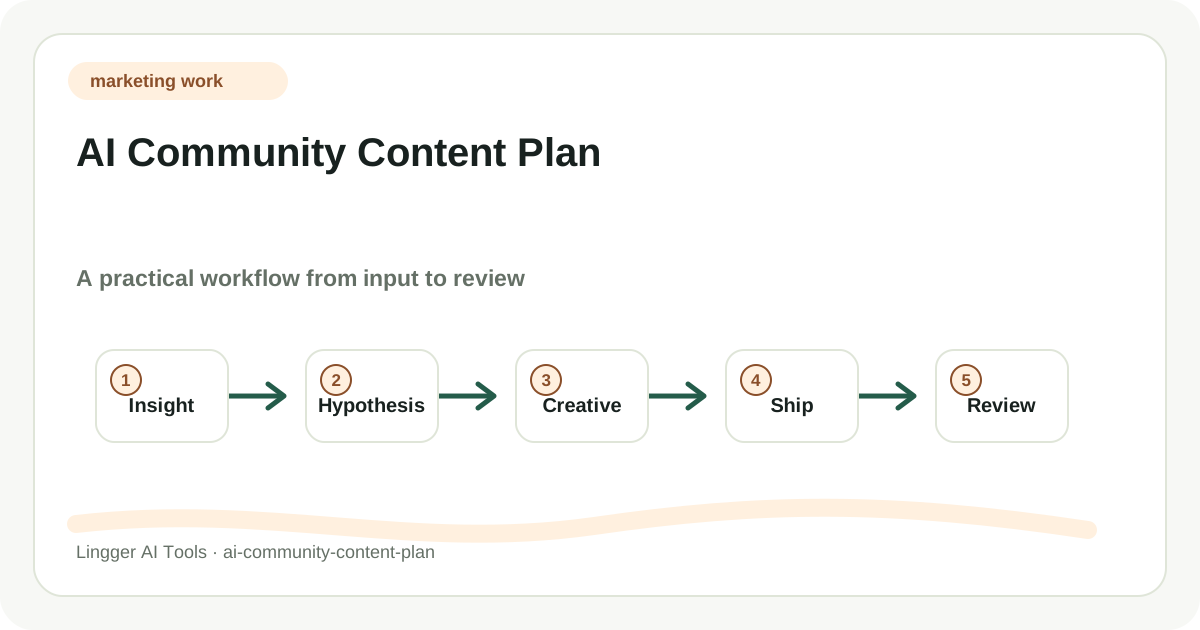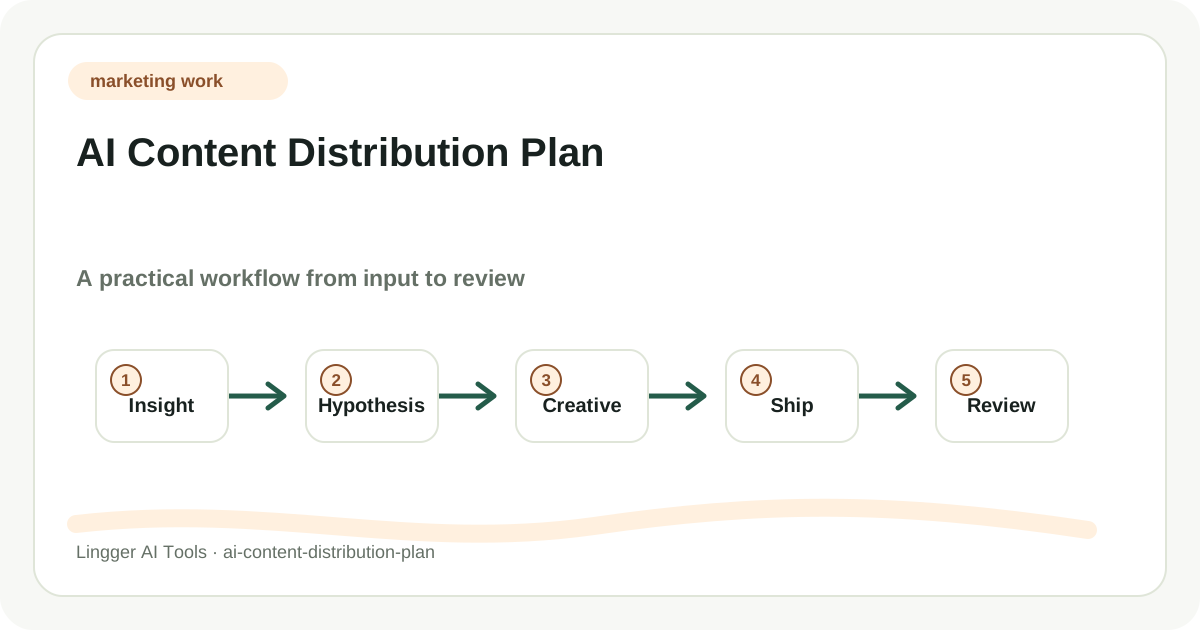
AI Content Distribution Plan works best when it turns creative energy into a decision the team can actually test. The useful question is not whether AI can write another variation, but whether the variation teaches the team something about audience, offer, channel, or timing.
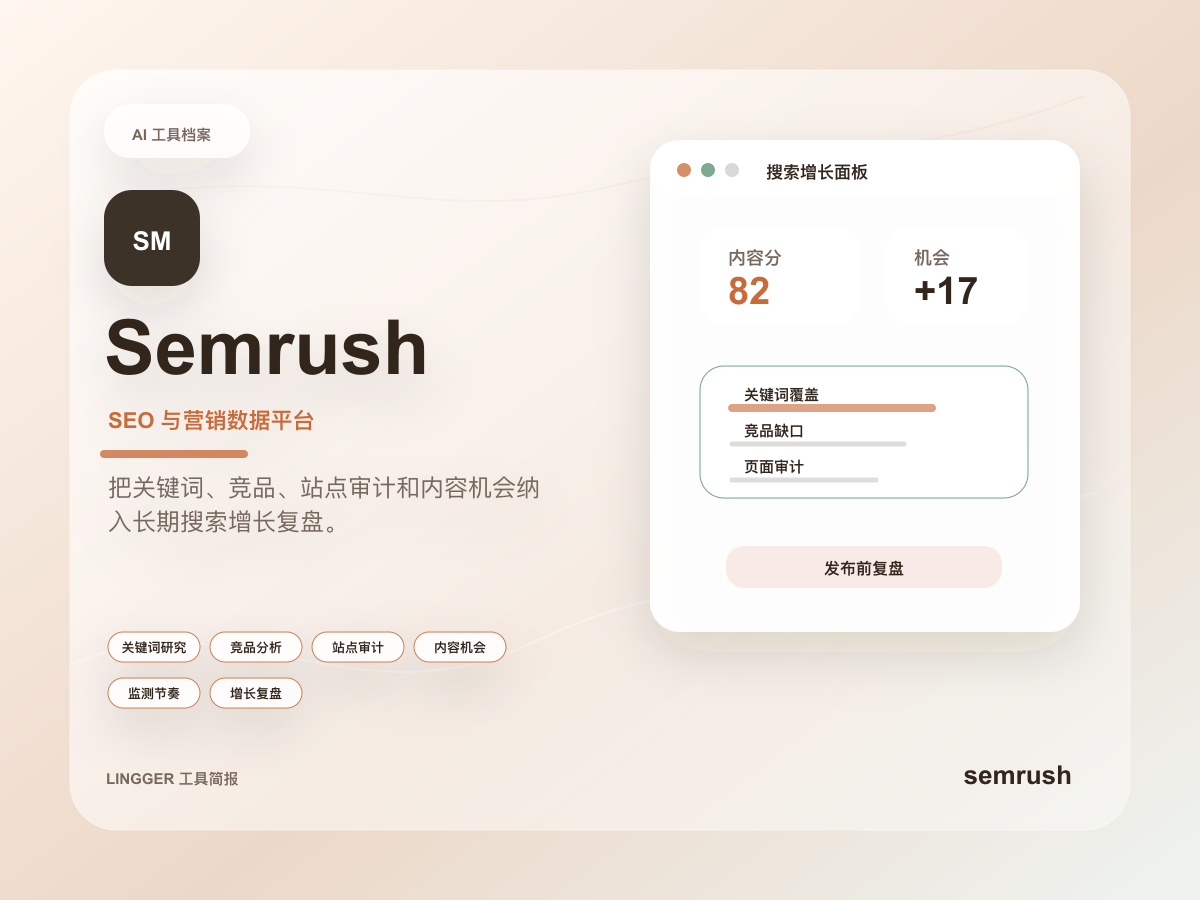
I would not ask Semrush to solve AI Content Distribution Plan as one oversized request. A better setup gives each tool a narrower job, keeps the source material visible, and leaves a review trail that another teammate can follow without reading the whole chat transcript.
Start with the real handoff
For AI Content Distribution Plan, I would start with the decision that follows the draft. Is the team choosing a message angle, preparing an experiment, briefing a designer, or writing a launch note? That downstream use changes the shape of the AI request. A testing workflow needs hypotheses and variants; a campaign brief needs constraints, audience notes, and approval criteria.
A small first run is enough. Pick one real example, one owner, and one visible output. For AI Content Distribution Plan, that means the result should name what was provided, what the model changed, what still needs a human call, and where the work goes next. If those pieces are missing, the output may be fluent, but it is not operational.
Build the working surface
A practical AI Content Distribution Plan workbench has four lanes: the market signal, the creative task, the review owner, and the learning log. The market signal may be customer language, search terms, objections, or prior campaign data. The creative task defines what AI should produce now. The review owner decides what survives. The learning log records what to try next rather than letting every prompt disappear into chat history.
Semrush should produce a testable marketing angle, not a final verdict. In AI Content Distribution Plan, I would let the second tool look for audience objections or channel mismatch, then use the final assistant to turn the surviving idea into a variant table, launch note, or experiment checklist. That separation keeps creative speed from overwriting learning.
Prompt for decisions, not decoration
The prompt should sound like a campaign assignment, not a request for clever copy. For AI Content Distribution Plan, give Semrush the audience, offer, channel, and test question. Ask the second tool to challenge the angle or find missing objections. Keep the final tool for rewriting into a usable checklist, variant table, or handoff note.
A good prompt for AI Content Distribution Plan also asks the model to label uncertainty. I want separate sections for confirmed input, proposed output, assumptions, and questions for the human reviewer. That format is less theatrical than a single polished answer, but it is much easier to improve after the first run because weak inputs and weak reasoning are visible.
Review before reuse
Review AI Content Distribution Plan by looking for evidence behind each recommendation. A line can be punchy and still be wrong for the customer. I would check whether the output names the audience, separates claims from guesses, explains the test condition, and leaves the next action obvious enough that a teammate can run it without another meeting.
Product details still need a separate check. Semrush can change feature names, pricing, limits, and availability. For AI Content Distribution Plan, the durable advice is the workflow: where the tool belongs, what evidence it needs, what humans must verify, and how the team records what it learned.
Make the first loop small
The first run of AI Content Distribution Plan should be deliberately small: one audience segment, one offer, one channel, and one measurement window. After the test, keep the losing ideas too, because they often explain what not to ask AI for next time. The workflow becomes valuable when the team can compare decisions across runs, not when it produces the most polished paragraph.
After a few passes, AI Content Distribution Plan should leave behind more than output. It should leave examples, rejection notes, and a sharper prompt that reflects how the team actually works. That is the sign the workflow is becoming reusable: not because every paragraph sounds the same, but because each run makes the next decision easier.